In this article
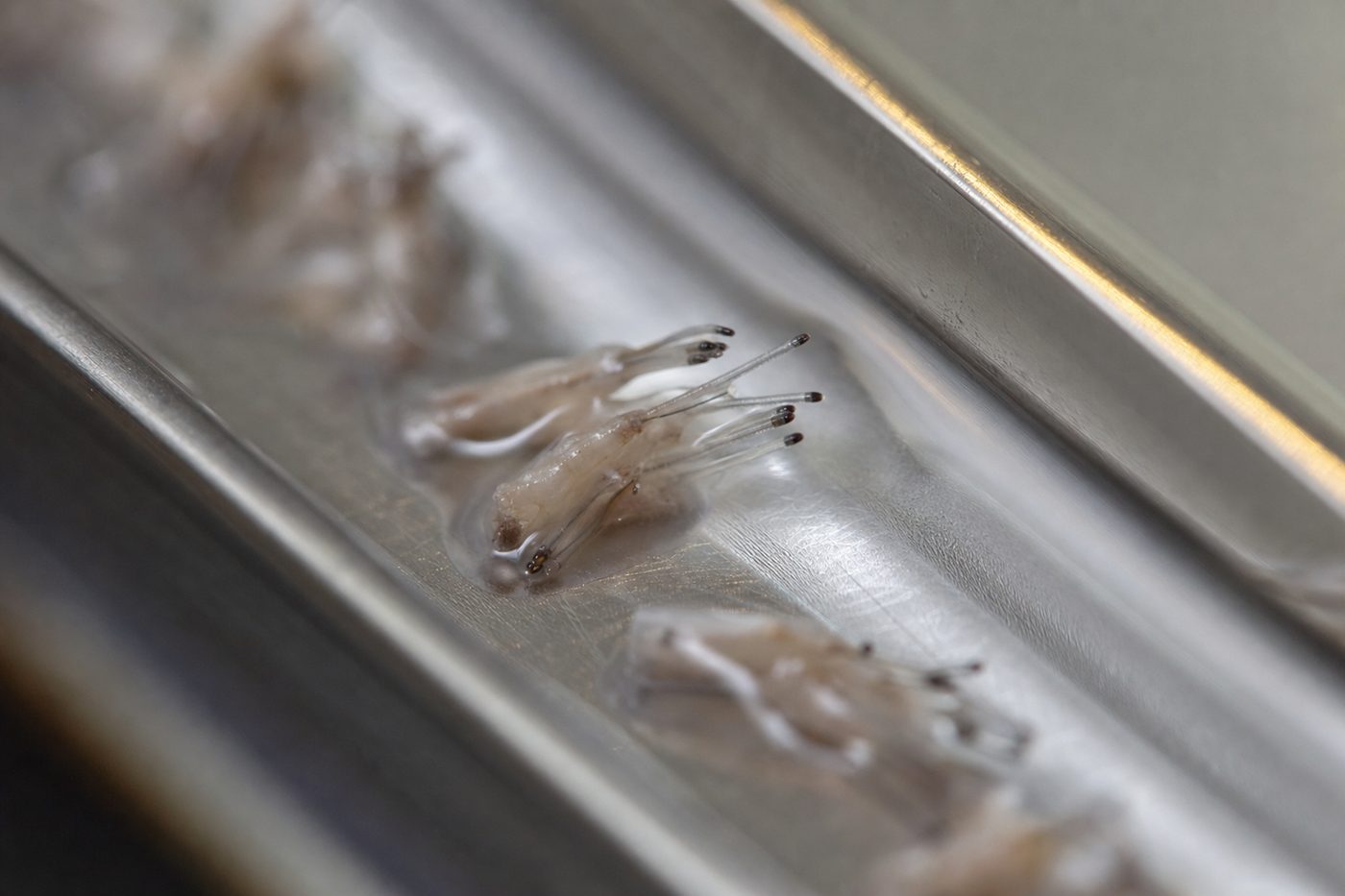
First, what a graft isThe five things that decide your numberWhy we measure rather than estimateA word on very large numbers- A graft is a follicular unit: a natural group of one to four hairs.
- Your number depends on the area, the density that will look natural, your hair itself and your donor capacity.
- Donor supply is finite, so a responsible plan keeps some in reserve.
- An online calculator gives a range. An examination gives a number.
It is usually the first thing people ask, and it is the one thing nobody can answer properly from a photograph. Two men with what looks like the same hairline can need very different plans. Here is what sits behind the number you are eventually given.
First, what a graft is
Hair does not grow as single strands. It grows in follicular units, small natural groupings of one to four hairs. A graft is one of those units, moved intact. That is why a graft count and a hair count are not the same thing, and why the mix of single and multiple-hair units matters: single-hair grafts build a soft hairline, while larger units build density behind it.
The five things that decide your number
- The area to be restored. A receded hairline, a thinning mid-scalp and an open crown are different sizes of problem, and crowns in particular take more than most people expect.
- The density that will look natural. The aim is a result that suits your age and face, designed rather than maximised.
- Your hair itself. Thicker, wavier hair covers more scalp per graft than fine, straight hair, and the contrast between hair colour and skin tone changes how much coverage is needed.
- What your donor area can safely give. Every graft comes from one finite band of permanent hair at the back and sides. Over-harvest it and it does not recover.
- What the next twenty years may bring. Hair loss continues. A sound plan holds donor capacity in reserve for the decades ahead instead of spending it in one sitting.
Why we measure rather than estimate
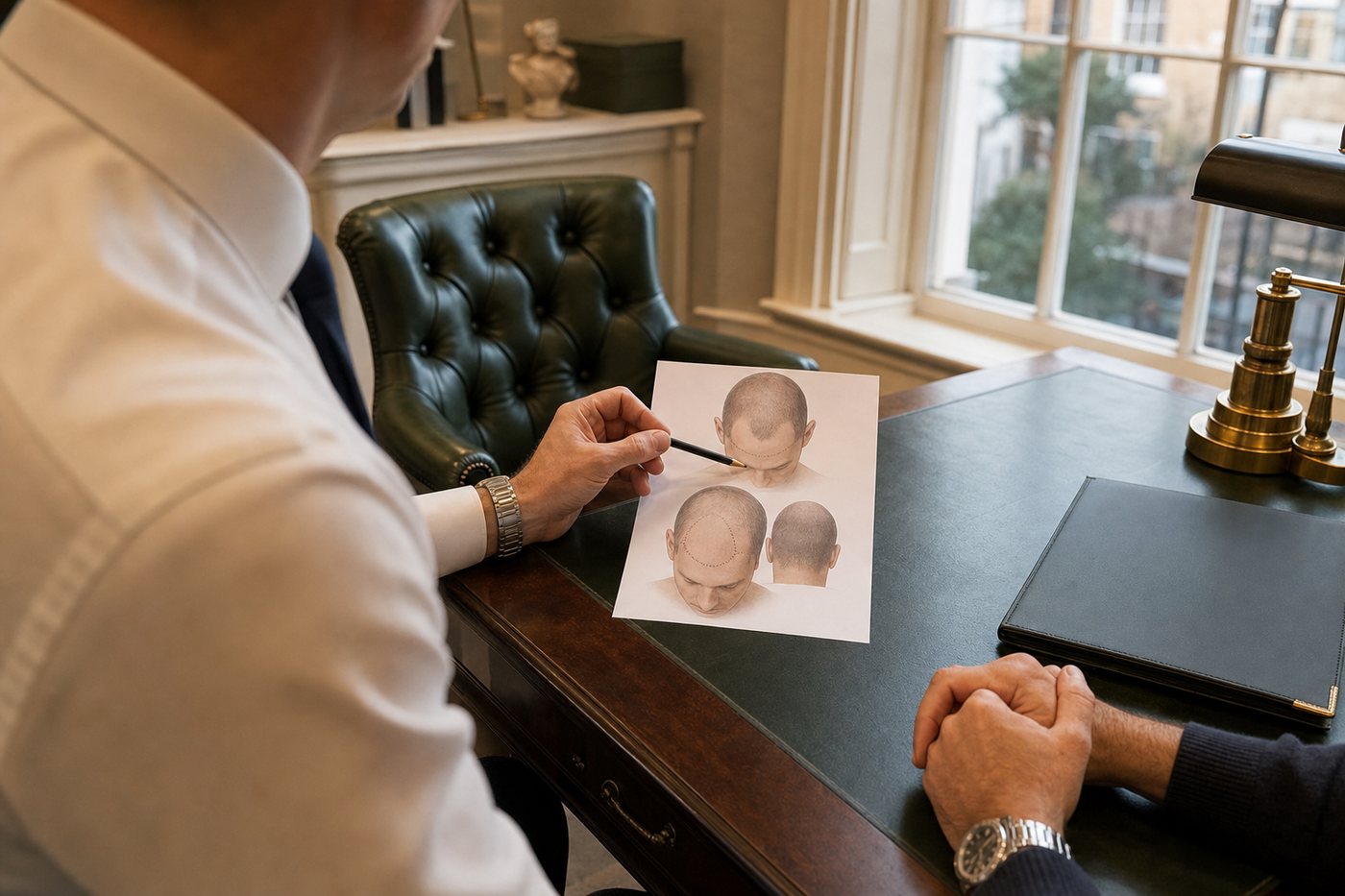
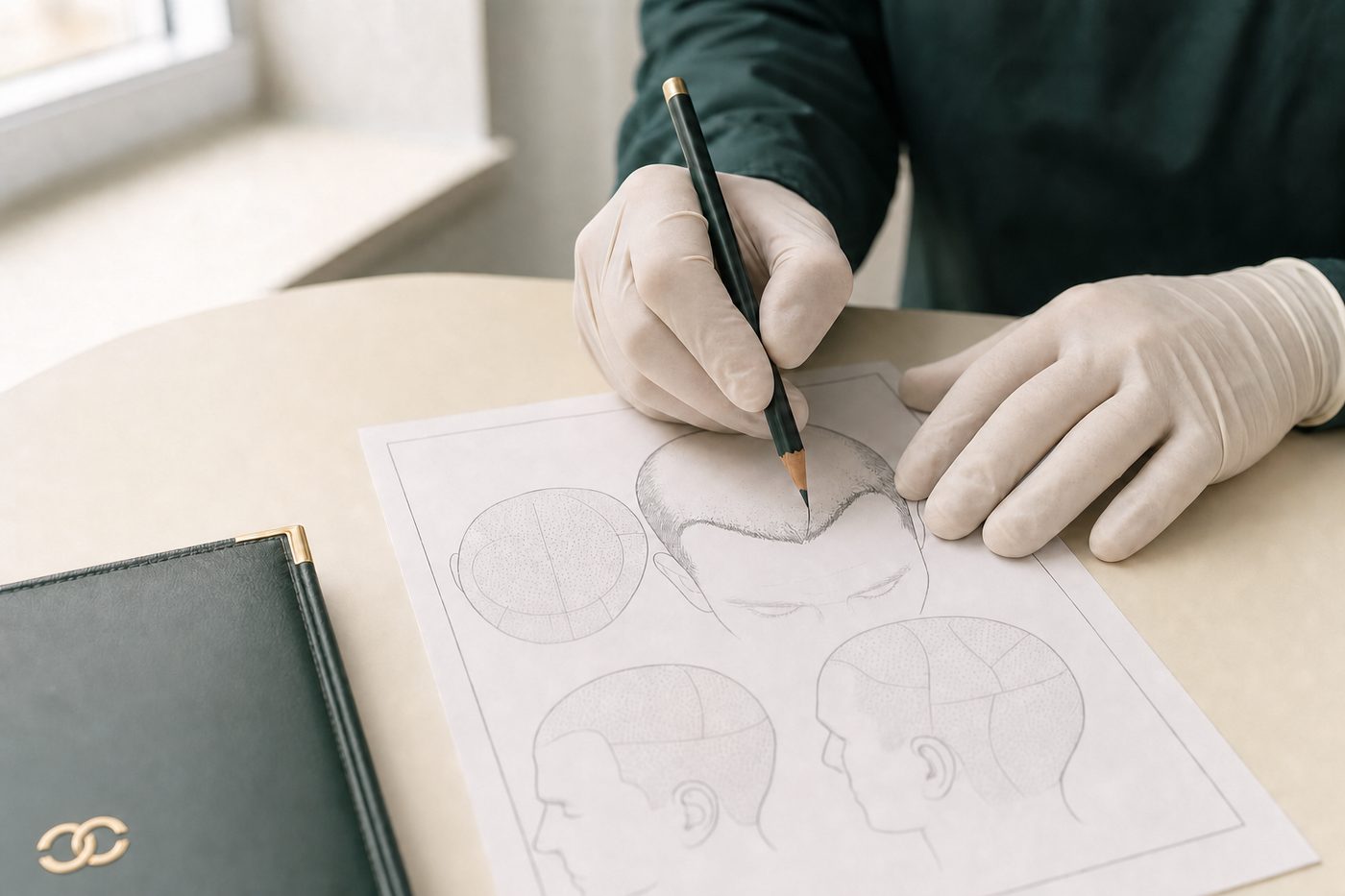
At City Clinics the count you discuss is calculated from robotic scalp mapping: follicle density, hair calibre and the true capacity of your donor area, measured before anything is promised. Your surgeon then draws the design by hand and agrees it with you in the mirror. Your data is shared with you openly. It is your head, and your decision.

A word on very large numbers
More is not automatically better. A very high graft count quoted without an examination of your donor area is a sales figure, not a surgical one. The right number is the one your donor supply can responsibly support, placed where it will do the most good.
Our graft estimator gives a sensible starting range. Your own number is confirmed at consultation, from measurement.