

IWhy it matters
The twenty minutes nobody wants to make.
Picture the end of a surgical day anywhere else: fresh dressings, a tender scalp, and a prescription that still has to be filled. So you sit in a car to a high-street pharmacy, take a ticket, and stand in a queue of strangers — at the exact moment you least want to be looked at.
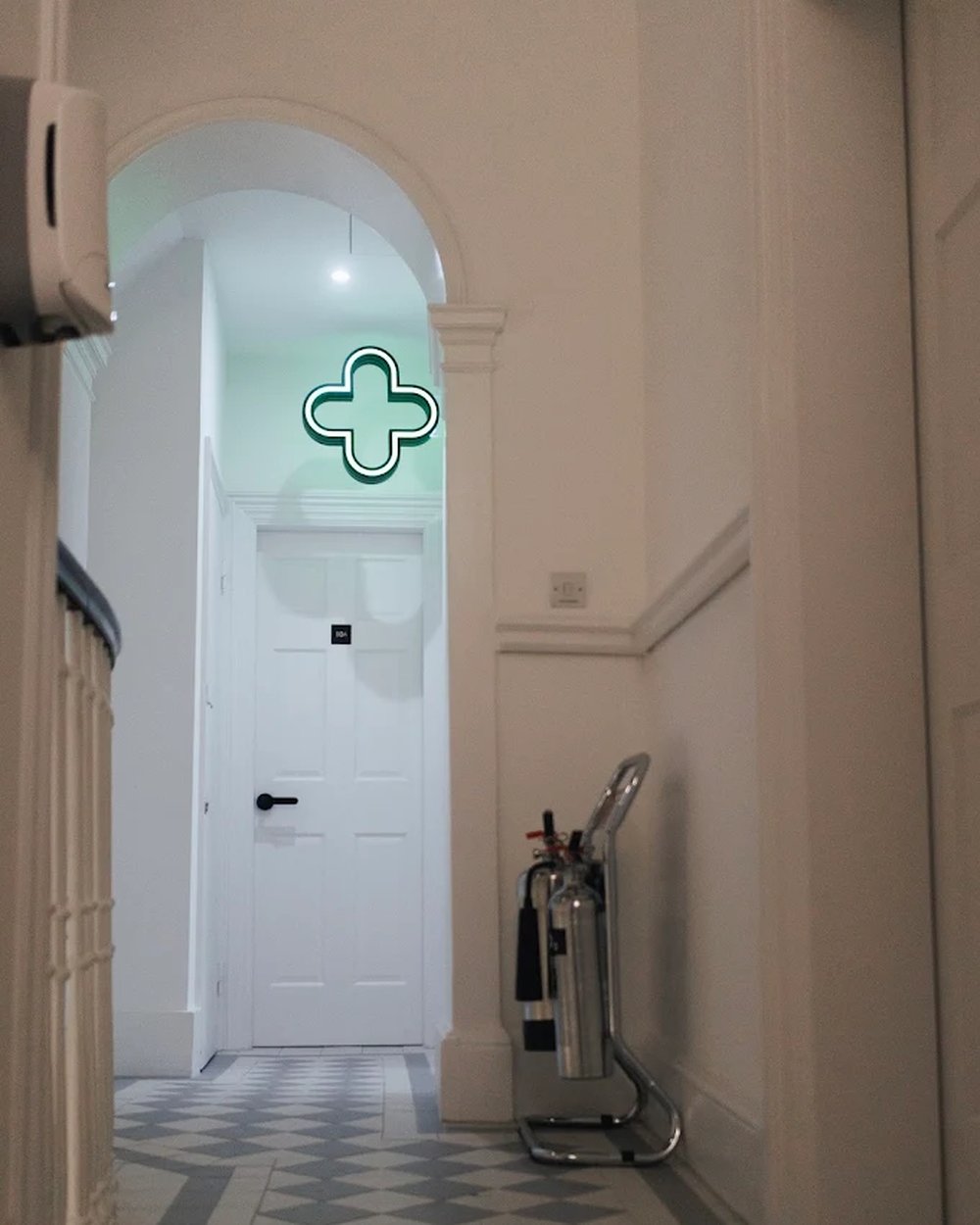
Most patients tell us the same thing: after surgery, they just want to go home. So we built the pharmacy into the building. Your medication is dispensed a corridor away from the theatre — and the only journey left is the one to your own front door.
IIHow it works on the day
Written upstairs. Ready downstairs.
IIIThe dispensary
Small, precise, and never crowded.
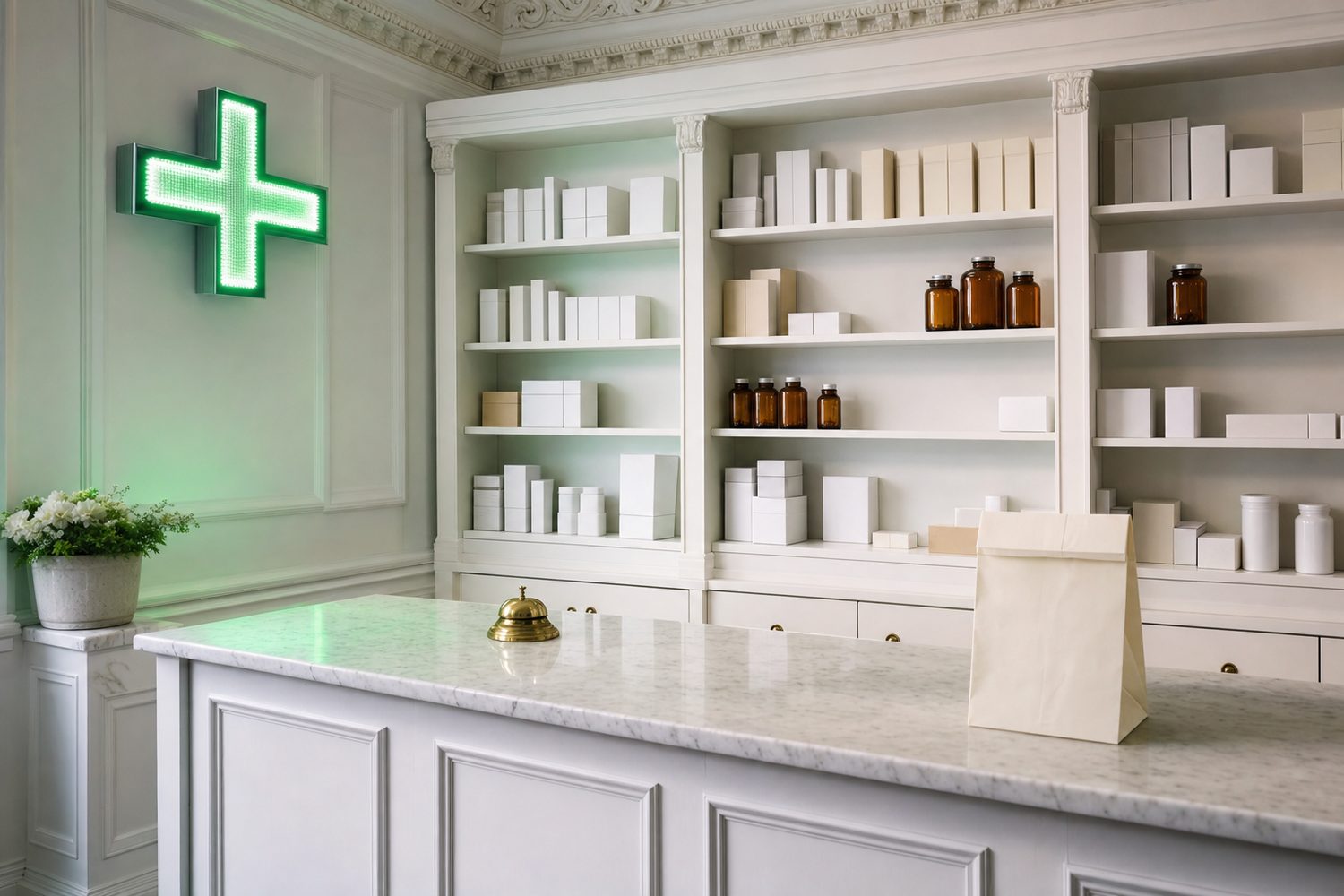
This is not a shop. There is no aisle of toothpaste, no queue snaking past the perfume counter — just a dispensary that exists for the patients of this building, one of whom is you.

IVDiscretion, by design
The only people who see you work here.
- No shop floor — the pharmacy serves this building, not the street.
- No waiting in public — you are handed your medication in private, dressing and all, by people who watched it heal on a hundred heads before yours.
- No explaining yourself — nobody at this counter needs to ask what happened to your head. They already know, and they could not be less surprised.
- Family can collect — if you would rather wait in the car, whoever is with you can be handed the bag.
VWhy almost nobody else has this
A pharmacy needs a working clinic around it.
An in-house pharmacy is not something a rented consulting room can bolt on. It belongs to the fabric of a working surgical clinic — the governance, the clinical team, the premises — which is exactly what 82 Harley Street is. Very few hair transplant clinics in Britain can offer it, because very few are hospitals.
VIWhat the pharmacy takes care of
Everything the year of aftercare asks for.


VIIThe person behind the counter
A pharmacist on the team, not at the end of a phone.
The pharmacy is run by a registered pharmacist who works alongside the surgical team — the same corridor, the same patients, the same standard. If a question comes up about your medication, it is settled between your pharmacist and your surgeon by walking up one flight of stairs, not by leaving messages with a call centre.
And when you collect, you get the two minutes that matter: what to take, when to take it, and what to do if you are unsure — explained by someone who knows exactly what was done today.

Your medication rides home in the same car.
For travelling patients the pharmacy and the concierge work as one: prescription dispensed, kit packed, chauffeur waiting — airport, hotel or home, with nothing to collect on the way.
VIIIAsked, answered
The practical questions, plainly.
Do I need to arrange anything?
No. If your surgeon prescribes something, the pharmacy is told before you are — it is simply part of your surgical day here.
Is it more expensive than a high-street chemist?
Your quote at City Clinics is fixed and all-inclusive, and your post-operative essentials are part of your plan — there is no surprise bill at a counter on the way out.
What if I need something once I am home?
Call the 24-hour line. Repeat items and kit restocks are arranged through the clinic, so the follow-through does not depend on what your local pharmacy happens to stock.
Can someone collect for me?
Yes — whoever is with you on the day can take the bag while you stay comfortable, and for travelling patients it can be handed straight to your chauffeur.
 Rated GoodCare Quality Commission
 ★ 4.6115 Trustpilot reviews
 GMC-registeredEvery surgeon, publicly listed
 MembersRoyal Society of Medicine
 MembersIntl. Society of Hair Restoration Surgery
 MembersBritish Assoc. of Cosmetic Surgeons
 As featuredDaily Mail
In-House Pharmacy · 82 Harley Street
Surgery, aftercare and the chemist’s counter — one address.
Ask about the pharmacy at your consultation, and see it on the clinic tour.
Registered with, members of & regulated by