Home·Understanding Hair Loss
Understand the loss before you fight it.
Most bad hair-transplant decisions are made in the first week of panic. This page is the antidote — how loss actually works, what the patterns mean, and when treatment genuinely helps. No sales team at the end of it; just a surgeon, if and when you want one.
The Norwood scale — where are you today?
The growth cycle
Every hair lives on a clock.
Each follicle cycles through growth, transition and rest — years growing, weeks retiring, months resting before the next hair begins. Shedding fifty to a hundred hairs a day is the cycle working, not failing.
Pattern loss is different: follicles miniaturise, each cycle producing a finer, shorter hair than the last, until the follicle falls quiet. That process — not the daily shed — is what treatment addresses.
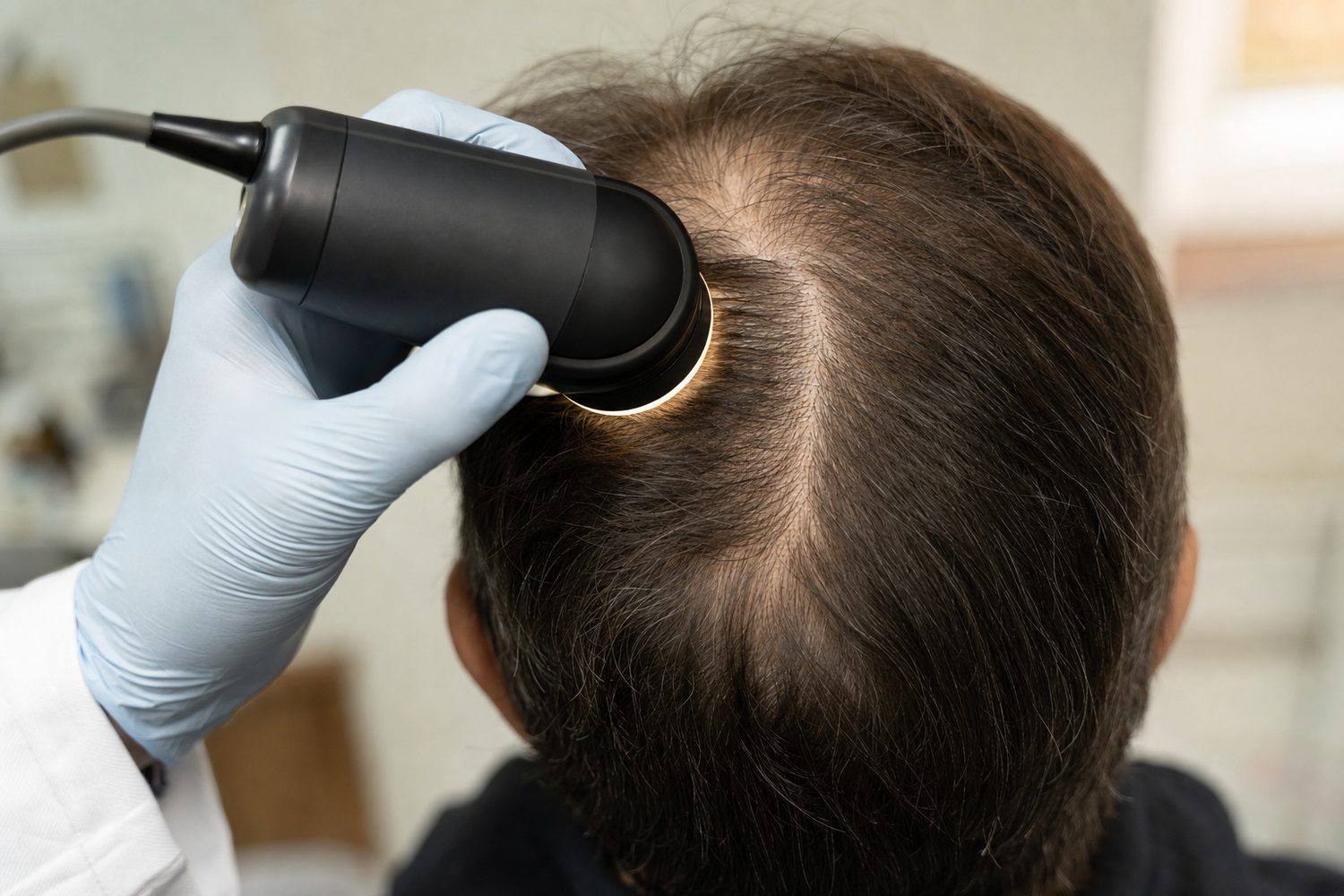
Male pattern loss
Three fronts, one pattern.
Clinicians grade this on the Norwood scale — seven stages, and your options narrow as they climb. Your stage is measured at consultation with KE-Bot mapping, not eyeballed from a doorway.
When to act
The right time is when it stabilises — not the day you panic.
Acting early keeps options open; operating on loss that hasn’t settled builds a result the next five years will undo. The honest sequence is diagnose, stabilise, then — only if it’s right — transplant. You’ll hear that sequence here even when it means waiting.
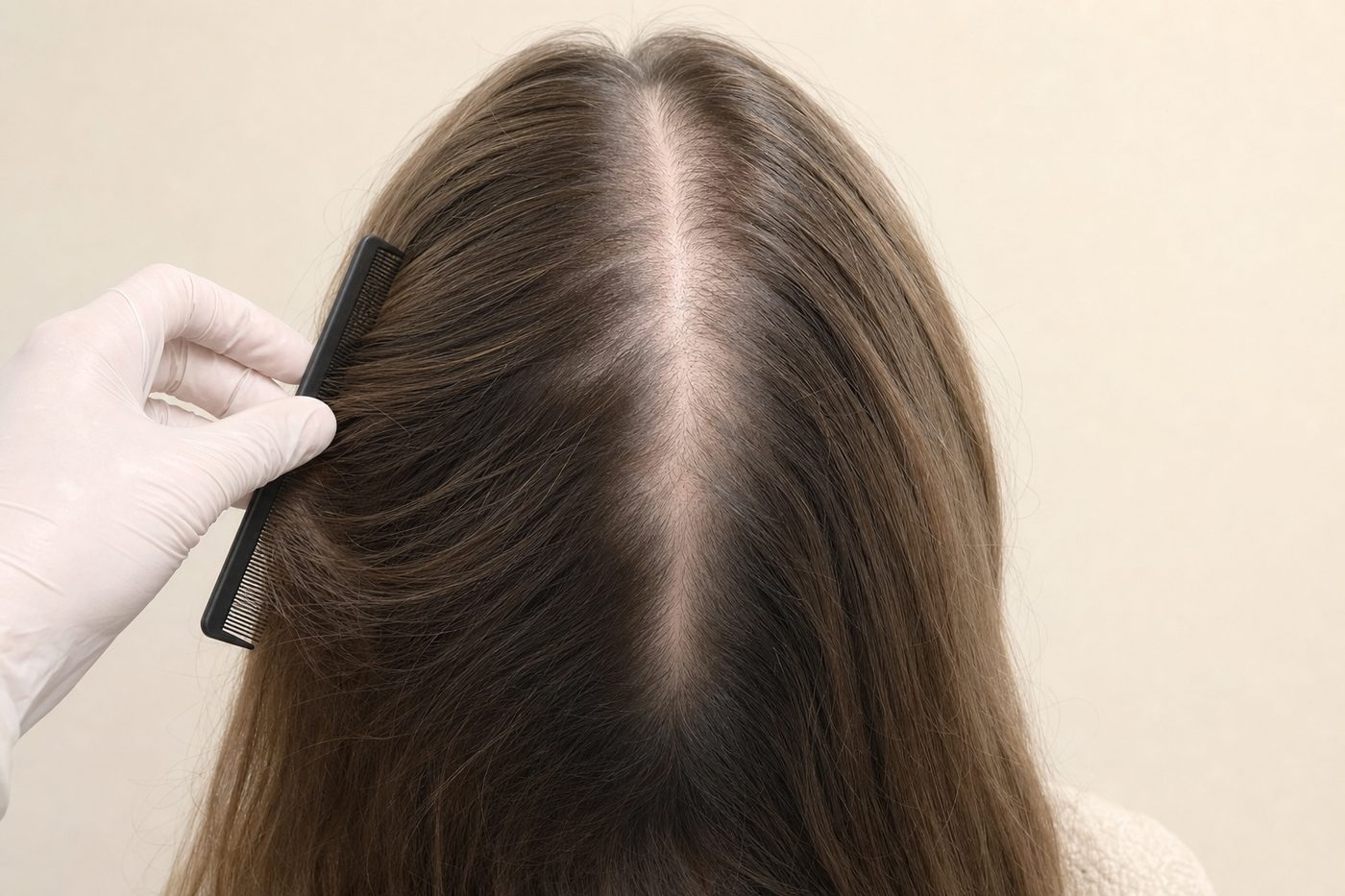
Hair loss in women
Different pattern. Different questions.
Female loss rarely follows the male map — it widens the parting and thins diffusely, graded on the Ludwig scale rather than Norwood. And it carries more differentials: hormonal shifts, thyroid, iron, postpartum change, traction from years of styling.
That is why the first step for women is a proper medical evaluation, not a quote. When restoration is right, it’s planned with the same one-patient-a-day care as every case here.
Female hair restoration →The causes
Not every loss is pattern loss.
Several of these should never be transplanted — which is why diagnosis comes before any talk of surgery, every time.
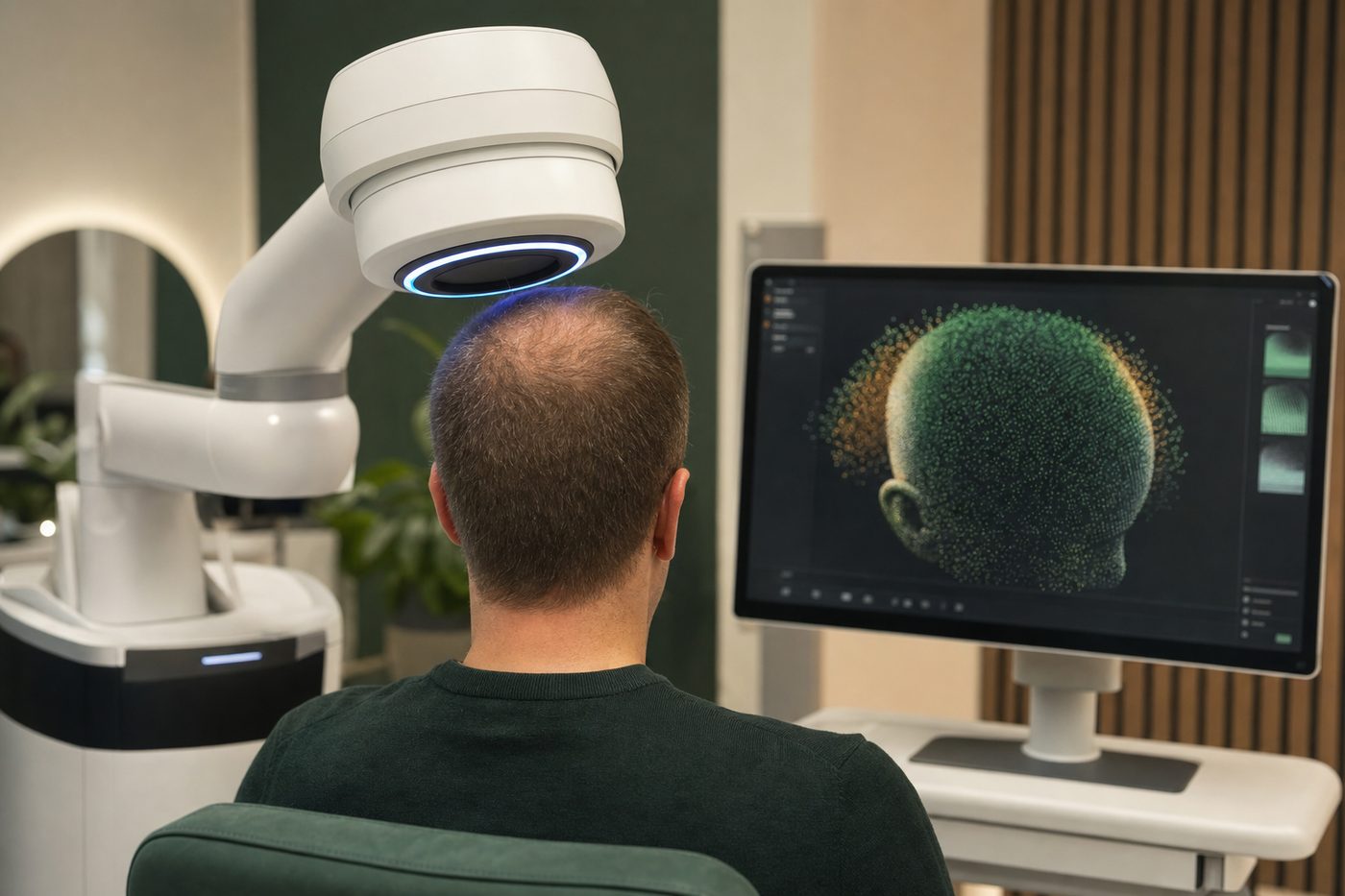
How we diagnose
Measured by machine. Judged by a surgeon.
Your consultation pairs KE-Bot robotic scalp mapping — density, calibre, pattern, charted objectively — with a surgeon’s assessment of where your loss is heading and whether it has settled.
You leave with an honest picture and a written plan, even when the plan is “not yet”. There is no adviser between you and that answer.
How the technology works →Treatment pathways
If treatment is right, it will be the right treatment.
Surgical restoration when the pattern calls for it. PRP to support growth. Micropigmentation where density is the goal. Medical, non-surgical options exist too — they’re discussed with a surgeon at consultation, not marketed on a website.
Hair loss questions
Asked in every first consultation.
Is my hair loss permanent?
Will a transplant stop my hair loss?
Do I need blood tests?
What if I’m not a candidate?
82 Harley Street · London
Start with the diagnosis, not the decision.
An hour with your surgeon and the map of your own scalp — then decide with the facts in front of you.
Registered with, members of & regulated by