In this article
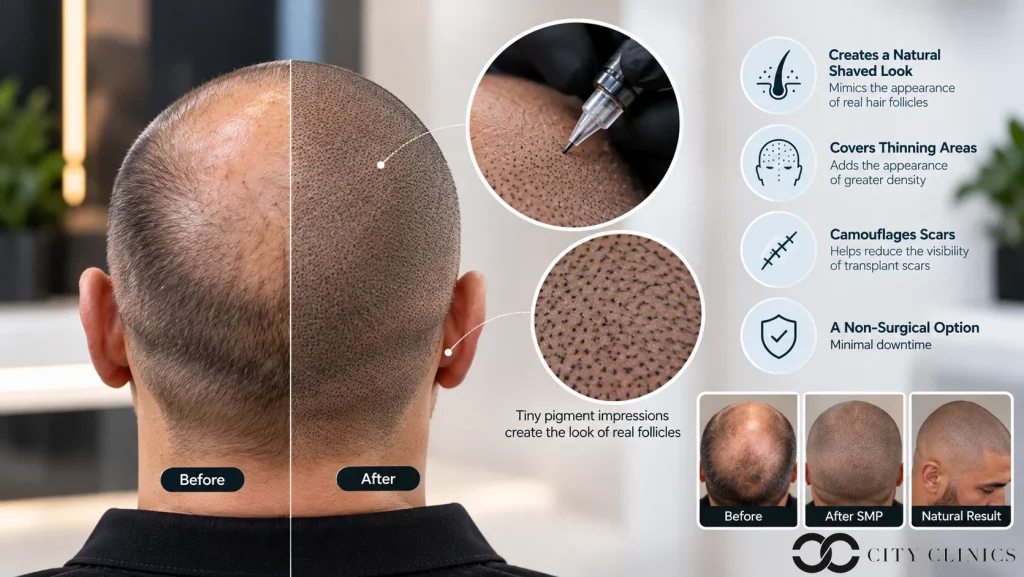
What Is Scalp Micropigmentation?How Does Scalp Micropigmentation Work?Is Scalp Micropigmentation the Same as a Regular Tattoo?What Are the Main Uses of SMP?Who May Be Suitable for Scalp Micropigmentation?What Are the Benefits of Scalp Micropigmentation?What Are the Risks and Limitations of SMP?How Many SMP Sessions Are Needed?How Long Does Scalp Micropigmentation Last?Scalp Micropigmentation vs Hair Transplant: What Is the Difference?What Should You Ask Before Choosing an SMP Practitioner?Scalp Micropigmentation at City ClinicsFrequently Asked Questions About Scalp MicropigmentationFinal Thoughts: Is Scalp Micropigmentation Worth Considering?Sources and Further ReadingScalp micropigmentation (SMP) is a non-surgical cosmetic procedure that places tiny pigment impressions into the scalp to create the appearance of closely shaved hair follicles or greater hair density. It can help camouflage visible thinning, extensive hair loss and certain scalp scars. However, SMP does not grow hair, create new hair follicles or stop the underlying cause of hair loss.
The procedure uses carefully placed pigment dots to replicate the visual pattern of short hair. Depending on the individual’s goals, SMP can create a closely shaved appearance, make thinning areas look less visible or help camouflage selected scars from previous hair transplant surgery.Understanding how SMP works, what it can realistically achieve and how it differs from a hair transplant can help you decide whether it is an appropriate option for your situation.
What Is Scalp Micropigmentation?
Scalp micropigmentation is a specialised cosmetic pigmentation procedure in which a trained practitioner deposits small amounts of pigment into carefully selected points on the scalp. The dots are designed to resemble the appearance of hair follicles, particularly when the hair is shaved or cut very short.
When the pigment colour, dot size, placement and density are planned appropriately, the scalp can appear more uniform, creating the visual impression of a closely shaved head or fuller coverage between existing hairs.
SMP is sometimes described as a scalp tattoo because both procedures involve placing pigment into the skin. However, SMP requires a technique and design tailored to the scalp, the desired hair effect, the individual’s skin and hair colour, and the areas being treated.
The key distinction is that SMP changes the appearance of the scalp rather than restoring biological hair growth. It is a cosmetic option for people who want to camouflage the visible effects of hair loss without undergoing a hair transplant.
How Does Scalp Micropigmentation Work?
SMP works by creating a carefully distributed pattern of tiny pigment impressions that resemble the visible appearance of short hair follicles. The result depends on the relationship between the pigment, the scalp’s natural colour, any remaining hair and the intended hairstyle.
A typical treatment pathway includes the following stages.
1. Scalp assessment and treatment planning
The practitioner assesses the areas to be treated, the pattern of hair loss, the condition of the scalp, skin tone and hair colour. If the cause of hair loss is unclear or there are signs of an underlying scalp condition, appropriate medical assessment may be needed before proceeding.
The treatment plan should reflect the individual’s goals. Someone seeking a closely shaved appearance may need a different design from someone who wants to make a thinning crown or transplant marks less noticeable.
2. Hairline and pigment design
For a shaved-head effect, the planned hairline plays an important role in the overall appearance. It should be designed in proportion to the person’s facial features, age, existing hairline and preferences.
Pigment colour and density also need careful consideration. A hairline that is too straight, too low or too dark can look unnatural. For density enhancement, the pigment pattern should blend with the existing hair rather than create a visibly separate area.
3. Application of the pigment
Using specialist equipment and fine needles, the practitioner places small pigment impressions into selected areas of the scalp. The technique requires control over pigment placement, spacing and depth to create a natural-looking pattern.
The appearance is built through multiple carefully planned impressions rather than one solid block of colour. Poorly placed or overly dense pigment can create an unnatural result, while pigment that spreads or changes appearance over time may affect the original design.
4. Gradual layering over treatment sessions
SMP is commonly carried out over more than one session. A gradual approach allows the practitioner to assess how the pigment appears as the scalp settles and to refine the density and overall design.
The number of sessions depends on the size of the area, the desired effect, the individual’s skin and the practitioner’s protocol. There is no single schedule that should be assumed to suit every patient.
5. Healing, review and possible refresh sessions
The scalp may look red or feel sensitive immediately after treatment. Its appearance can change as the skin settles, so the final result should not be judged solely from photographs taken immediately after a session.
Over time, pigment can soften or fade. Some people choose a refresh session to maintain the appearance, while others may be comfortable with the gradual change. The need for maintenance depends on the individual result and preferences.
Is Scalp Micropigmentation the Same as a Regular Tattoo?
SMP and conventional tattooing share a fundamental principle: pigment is placed into the skin. However, the application, equipment, pigment selection and visual objectives may differ.
Traditional body tattooing commonly creates lines, illustrations or larger areas of colour. SMP is designed to create small follicle-like impressions and a pattern that looks consistent with the surrounding scalp and hair.
The distinction should not be overstated. SMP is still a form of cosmetic pigmentation, and its long-term appearance depends on the materials used, how they are applied, the individual’s skin response and exposure to factors such as sunlight.
| Feature | Scalp Micropigmentation | Conventional Body Tattoo |
|---|---|---|
| Primary purpose | Creates the appearance of hair follicles or improved visual density. | Creates decorative designs, lettering or areas of colour. |
| Design approach | Planned around the scalp, hair pattern, hairline and surrounding features. | Planned around the intended tattoo artwork and body location. |
| Pigment placement | Carefully controlled to create small, follicle-like impressions. | Varies according to the tattoo design and technique. |
| Appearance over time | May soften, fade or change in appearance; a refresh may be considered. | May also fade or change in appearance over time. |
| Effect on hair growth | Creates a cosmetic effect; it does not regrow hair. | Does not function as a hair-growth treatment. |
For a broader explanation of scalp micropigmentation terminology, see the International Society of Hair Restoration Surgery’s guide to scalp micropigmentation.
What Are the Main Uses of SMP?
Scalp micropigmentation can be used for different cosmetic goals. The right approach depends on the amount and distribution of existing hair, the condition of the scalp and the appearance the individual wants to achieve.
1. Creating a closely shaved-head appearance
For people with extensive hair loss, SMP can create the appearance of short, closely shaved hair across the scalp. The pigment pattern is designed to resemble follicle stubble rather than longer hair.
This may appeal to people who prefer a consistently shaved appearance and want to reduce the contrast between areas with hair and areas with little or no visible hair.
The outcome depends on careful design and execution. SMP cannot reproduce the texture, movement or growth of real hair, and the effect may look different at close range than it does in photographs.
2. Making thinning hair look denser
For people who still have hair, SMP may help reduce the visual contrast between the hair and the scalp. Carefully placed pigment can make areas such as the crown or parting appear less exposed.
Density enhancement is not the same as increasing the number of hairs. It creates a camouflage effect, and the result needs to work with the person’s existing hair length, colour and distribution.
People with longer hair should discuss how the pigment will blend with their current hairstyle and how future hair loss could affect the appearance.
3. Camouflaging selected hair transplant scars
SMP may help reduce the visibility of some scars associated with previous hair transplant surgery. For example, it may be considered for a healed linear scar following follicular unit transplantation (FUT), sometimes called strip surgery.
Scar camouflage is not always successful. Scar colour, texture, thickness, blood supply and healing characteristics can affect how the skin accepts and retains pigment. A scar should be assessed before treatment to determine whether SMP is appropriate.
Read more about FUE hair transplantation and discuss any existing surgical scars with a suitably qualified practitioner.
Who May Be Suitable for Scalp Micropigmentation?
SMP may be worth considering for adults who want a cosmetic way to reduce the visible effects of hair loss without relying on new hair growth. However, suitability depends on the individual’s goals, scalp condition, medical history and expectations.
Potential candidates may include people who:
- Prefer the appearance of a closely shaved head.
- Want to make some areas of thinning hair look less noticeable.
- Have selected healed scalp scars that may be suitable for pigment camouflage.
- Have limited donor hair for a transplant or do not want surgery.
- Understand that SMP is a cosmetic procedure rather than a treatment that restores hair growth.
SMP may not be appropriate in every situation. Active scalp infection, inflammation, certain skin conditions, a history of abnormal scarring or a tendency to form keloids may affect suitability. The practitioner should review relevant medical history and advise whether further assessment is necessary.
If hair loss is sudden, patchy, unexplained or associated with scalp pain, redness, scaling or scarring, seek appropriate medical assessment rather than relying on cosmetic camouflage alone.
What Are the Benefits of Scalp Micropigmentation?
The main benefit of SMP is its ability to change the appearance of the scalp without surgically relocating hair follicles.
- Non-surgical approach: SMP does not require a hair transplant operation.
- Cosmetic camouflage: It can create the appearance of closely shaved follicles or reduce the visibility of some thinning areas.
- Potential scar camouflage: Selected healed scars may be made less noticeable.
- Customised appearance: The design can be planned around the individual’s hairline, scalp and desired hairstyle.
- No hair growth required for the visual effect: The cosmetic appearance comes from pigment rather than newly grown hair.
These benefits should be weighed against the procedure’s limitations, the possibility of pigment changes, the need for aftercare and the importance of choosing a suitably trained practitioner.
What Are the Risks and Limitations of SMP?
Although SMP is non-surgical, it involves placing pigment into the skin and should not be considered entirely safe.
Potential risks and limitations include:
- Infection: Inadequate hygiene or contaminated equipment can introduce infection.
- Skin or pigment reactions: Some people may develop irritation or an allergic reaction to pigment ingredients.
- Unnatural results: Poor hairline design, incorrect pigment placement, excessive density or an unsuitable colour can make the treatment noticeable.
- Fading or changes in appearance: Pigment can soften, fade or change appearance over time.
- Scarring concerns: People prone to keloids or abnormal scarring should discuss their risk before treatment.
- Correction difficulties: Unsatisfactory pigment placement or colour changes can be difficult to correct and may require specialist assessment.
- Ongoing hair loss: SMP does not prevent further hair loss, so the relationship between the pigment and remaining hair may change.
Seek medical advice promptly if you develop worsening pain, spreading redness, significant swelling, pus, fever or other signs of infection after treatment.
For additional information about potential complications and recovery, consult the Cleveland Clinic’s guide to scalp micropigmentation.
How Many SMP Sessions Are Needed?
Scalp micropigmentation is commonly performed over multiple sessions rather than completed in one appointment. This allows pigment to be added gradually and the appearance to be reviewed as the scalp settles.
The number of sessions depends on factors such as:
- The size of the treatment area.
- Whether the goal is a shaved-head effect, density enhancement or scar camouflage.
- The individual’s skin and how the pigment settles.
- The amount of detail required to create a natural-looking result.
- The practitioner’s treatment protocol and assessment of progress.
City Clinics describes its SMP approach as a three-sitting process, with the design and density built up gradually. This is the clinic’s stated approach; the treatment plan and suitability should be confirmed during consultation.
Before starting, ask for the proposed number of sessions, expected spacing, aftercare instructions and total cost. Do not assume that every clinic or every patient will follow the same schedule.
How Long Does Scalp Micropigmentation Last?
SMP is long-lasting, but its appearance is not necessarily unchanged forever. Pigment can gradually soften or fade, and the rate of change varies between individuals.
Factors that can influence the result include pigment composition, placement, skin characteristics, sun exposure, aftercare and the way the body responds to the pigment.
City Clinics states that its results soften gradually over several years and that refresh sessions may be used to maintain the appearance. This should be understood as the clinic’s description of its service rather than a fixed timeline for every person.
Ask the practitioner to explain how fading may affect the hairline and density pattern, whether future refresh sessions are likely and how the overall result will be maintained if your natural hair loss progresses.
Scalp Micropigmentation vs Hair Transplant: What Is the Difference?
SMP and hair transplantation address the appearance of hair loss in different ways. SMP uses pigment to create a visual illusion, while a hair transplant moves hair follicles from a donor area to a recipient area.
| Comparison | Scalp Micropigmentation | Hair Transplant |
|---|---|---|
| How it works | Creates the appearance of hair follicles using pigment. | Relocates hair follicles to selected areas. |
| Does it produce new hair growth? | No. | Transplanted follicles may grow hair after surgery, subject to clinical factors and outcome variability. |
| Surgical procedure | No hair transplant surgery is involved. | Requires a surgical procedure. |
| Can it create longer hair? | No. The effect is pigment-based. | Transplanted hair can generally be grown and styled, depending on the outcome. |
| Donor hair required | No. | Yes, for conventional hair transplantation. |
| Ongoing considerations | Pigment may fade and may need refreshing. | Healing, growth, future hair loss and long-term planning need consideration. |
Neither option is automatically better for everyone. The right choice depends on the individual’s hair loss, donor supply, preferred hairstyle, expectations, medical suitability and willingness to undergo surgery.
Some people may consider SMP and a hair transplant together. In selected cases, transplantation may provide real hair growth while SMP helps create the appearance of additional density or camouflage a suitable scar. Whether a combined approach is appropriate requires individual assessment.
Learn more about FUE hair transplantation at City Clinics or review the clinic’s results page for relevant examples, where available.
What Should You Ask Before Choosing an SMP Practitioner?
The quality of the design and application can have a substantial effect on how natural SMP looks. When comparing providers, consider the entire treatment process rather than choosing solely on price or promotional photographs.
Questions to ask include:
- What training and experience do you have specifically in scalp micropigmentation?
- Can I see healed results from people with a similar hair-loss pattern and skin tone?
- How will the hairline be designed to suit my face and age?
- How will you select pigment colour and density for my scalp?
- What results are realistic for my current hair and scalp condition?
- What are the possible complications, and how would they be managed?
- What aftercare restrictions should I follow?
- How many sessions are included in the quoted price?
- Could I need refresh sessions or corrective treatment in the future?
- What happens if I am unhappy with the result?
Ask to see healed photographs taken under clear, consistent conditions rather than relying only on freshly completed treatment images. If before-and-after photographs are used, check whether they show comparable lighting, angles and hair lengths.
Scalp Micropigmentation at City Clinics
City Clinics offers scalp micropigmentation for people considering a closely shaved appearance, visual density enhancement or camouflage for selected scalp scars.
The clinic describes its approach as a gradual process in which hairline design and pigment tone are planned first, followed by additional sessions to build density and refine the appearance. The clinic also states that pigment may soften over time and that refresh sessions can be considered.
These details describe City Clinics’ service and should not be interpreted as an assurance of a specific outcome. Suitability, treatment design, number of sessions and likely maintenance needs should be discussed individually.
Considering SMP? Visit the City Clinics Scalp Micropigmentation service page to learn more about the approach and arrange a consultation.
Frequently Asked Questions About Scalp Micropigmentation
What is scalp micropigmentation in simple terms?
Scalp micropigmentation is a cosmetic procedure that places tiny pigment impressions into the scalp to create the appearance of short hair follicles or greater visual density. It camouflages the appearance of hair loss but does not grow hair.
Is scalp micropigmentation a tattoo?
SMP is a specialised form of cosmetic pigmentation that shares the basic principle of placing pigment into the skin. Its technique, equipment, pigment selection and design are tailored to creating a realistic hair-follicle effect on the scalp.
Does SMP make hair grow?
No. SMP creates a visual effect only. It does not create new hair follicles, stimulate hair growth or stop the underlying process causing hair loss.
Does scalp micropigmentation look natural?
SMP can look natural when the pigment colour, dot placement, density and hairline are carefully designed. Results vary, and poor application or an unsuitable design can look artificial. Reviewing healed results from an experienced practitioner can help you assess their work.
How many sessions does SMP take?
SMP is commonly performed over multiple sessions so the practitioner can build the effect gradually. The number of sessions depends on the treatment area, desired result, skin response and treatment protocol. City Clinics describes a three-sitting approach for its service.
How long does scalp micropigmentation last?
SMP can remain visible for several years, but its appearance may gradually soften or fade. The rate varies by individual and treatment factors. Some people choose refresh sessions to maintain the result.
Can SMP cover a hair transplant scar?
SMP may help camouflage certain healed hair transplant scars, including some linear scars following FUT surgery. Suitability depends on the scar’s characteristics and how well it is likely to retain pigment. An individual assessment is necessary.
Can SMP and a hair transplant be combined?
Yes, selected patients may benefit from combining the procedures. A hair transplant can provide real hair growth, while SMP may help camouflage the scalp or create the appearance of additional density. The appropriate sequence and suitability should be assessed individually.
Is scalp micropigmentation permanent?
SMP is long-lasting, but the appearance can change over time. Pigment may fade or soften, and future refresh or corrective work may be considered. Ask the practitioner about expected ageing, maintenance and options if the result changes.
Does SMP have downtime?
SMP is non-surgical, but the scalp may be red, sensitive or irritated after treatment. Aftercare restrictions may apply, including guidance about washing, exercise and sun exposure. Follow the specific instructions provided by your practitioner.
Is scalp micropigmentation safe?
SMP can be performed as a cosmetic procedure, but it is not entirely without risks. Potential complications include infection, pigment reactions, unwanted cosmetic results and difficulties with correction. Practitioner training, appropriate hygiene, screening and aftercare are important.
Final Thoughts: Is Scalp Micropigmentation Worth Considering?
Scalp micropigmentation offers a cosmetic way to change the appearance of hair loss without undergoing a hair transplant. By creating tiny pigment impressions that resemble short follicles, it can provide the appearance of a closely shaved head, help make selected thinning areas less noticeable or camouflage certain scars.
Its most important limitation is also its defining feature: SMP changes how the scalp looks rather than restoring hair growth. The result depends on thoughtful design, appropriate pigment placement, the individual’s skin and hair characteristics, and realistic expectations about fading and maintenance.
Before deciding, compare SMP with other options, review healed examples of the practitioner’s work and discuss potential risks, aftercare and future maintenance. A consultation should help you understand whether the procedure matches your goals and what outcome is realistic.
Explore your options: Visit City Clinics’ Scalp Micropigmentation page to learn more about the treatment.
Sources and Further Reading
- City Clinics — Scalp Micropigmentation
- Natural results of scalp micropigmentation: A review (2022)
- Scalp micropigmentation: a useful treatment for hair loss (2013)
- Scalp Micropigmentation Is an Effective Treatment for Localized Alopecia: Technical Analysis and a Series of Ten Case Reports (2025)
- International Society of Hair Restoration Surgery — Scalp Micropigmentation: Semantics, Terminology, and Standards
- Cleveland Clinic — Scalp Micropigmentation: Before and After, Benefits and Side Effects
- Revision for unsatisfactory outcomes of scalp micropigmentation (2025)
Disclaimer: This article is for general educational purposes and does not replace individual medical advice, diagnosis or treatment. Scalp micropigmentation is a cosmetic procedure, and suitability should be assessed by an appropriately trained practitioner. Seek medical assessment for unexplained hair loss or symptoms affecting the scalp.