In this article
SMP vs Hair Transplant: What Is the Main Difference? What Is Scalp Micropigmentation (SMP)? What Is a Hair Transplant? When Might SMP Be the More Suitable Option? When Might a Hair Transplant Be the More Suitable Option? Can SMP and Hair Transplants Be Combined? SMP vs Hair Transplant: Recovery and Long-Term Considerations What About Cost: Is SMP Cheaper Than a Hair Transplant? How to Decide Between SMP and a Hair Transplant What Should You Ask During a Consultation? Common Mistakes to Avoid When Comparing SMP and Hair Transplants Frequently Asked Questions About SMP vs Hair Transplant SMP or Hair Transplant: Explore Your Options at City Clinics Sources and Further ReadingScalp micropigmentation (SMP) and hair transplantation are two different approaches to addressing the appearance of hair loss. Although both can improve how the scalp looks, they work in fundamentally different ways. A hair transplant moves living hair follicles from one area of the scalp to another, while SMP uses carefully placed pigment impressions to create the appearance of closely shaved hair follicles or greater hair density.
The right option depends on what you want to achieve. If you want real hair that can grow and be styled, a hair transplant may be worth exploring, provided your donor supply and overall suitability support it. If you prefer a closely shaved appearance, want to create the impression of greater density, or need to camouflage a suitable scalp scar, SMP may be an alternative to consider. In selected cases, both treatments can also be used as complementary approaches.
This guide explains the differences between SMP and hair transplantation, including how each treatment works, who may benefit, recovery considerations, limitations and the questions worth asking before making a decision.
SMP vs Hair Transplant: What Is the Main Difference?
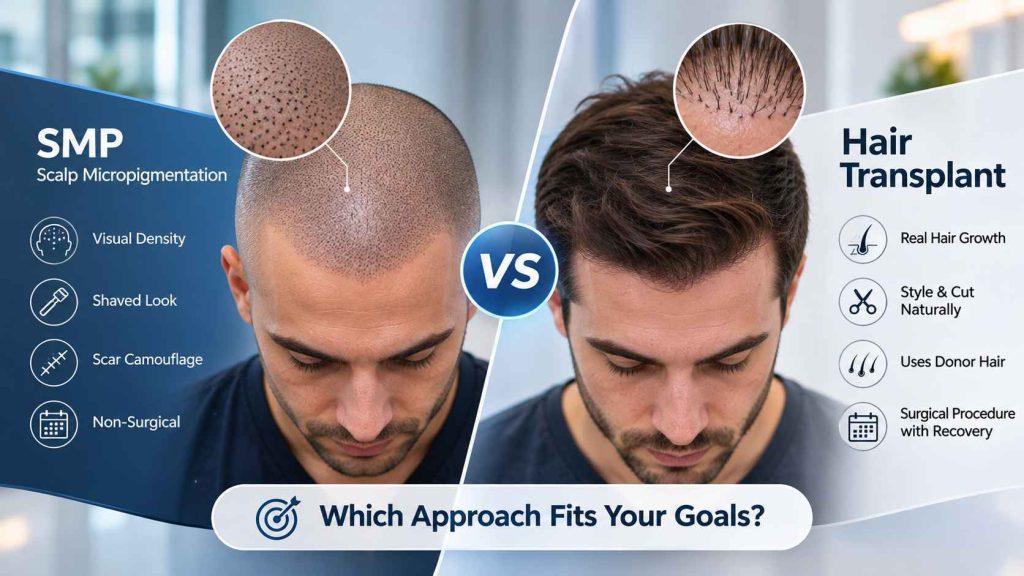
The main difference is that a hair transplant restores hair by relocating follicles, whereas SMP changes the visual appearance of the scalp using pigment. One involves surgery and the growth of transplanted hair. The other is a non-surgical cosmetic procedure that creates the impression of follicles but does not produce hair growth.
| Comparison | Scalp Micropigmentation (SMP) | Hair Transplant |
|---|---|---|
| How it works | Small pigment impressions are placed in the scalp to imitate the appearance of hair follicles. | Living hair follicles are moved from a donor area to areas affected by hair loss. |
| Hair growth | Does not create or restore biological hair growth. | Transplanted follicles can produce growing hair. |
| Typical aesthetic goal | A closely shaved appearance or the visual impression of greater density. | Restoration of hair that can be grown, cut and styled. |
| Procedure type | Non-surgical cosmetic pigmentation. | Surgical procedure. |
| Donor hair required | No donor hair is required. | Requires a suitable donor supply. |
| Recovery | Generally involves less disruption than surgery, although the practitioner will provide specific aftercare instructions. | Requires a recovery period and careful protection of the transplanted area. |
| Long-term considerations | Pigment gradually softens and may need refreshing. | Transplanted hair can continue growing, but existing non-transplanted hair may continue to thin. |
Neither treatment is a universal replacement for the other. Understanding the difference between cosmetic camouflage and biological hair restoration is the most useful starting point.
What Is Scalp Micropigmentation (SMP)?
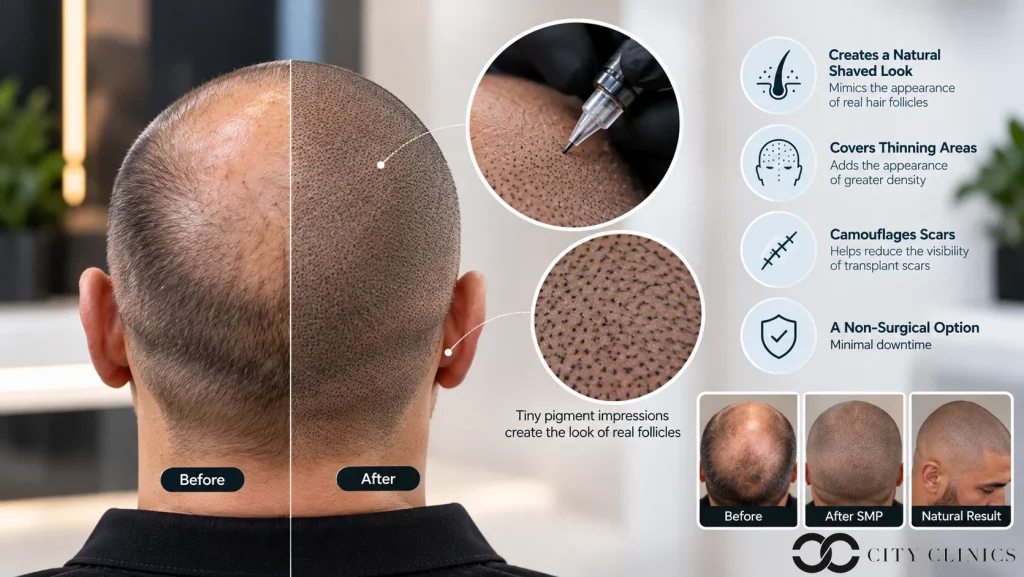
Scalp micropigmentation is a non-surgical cosmetic procedure that uses specialised equipment and pigment to create tiny impressions resembling natural hair follicles. When carefully designed and applied, these impressions can create the appearance of a closely shaved hairstyle or make thinning areas look visually denser.
SMP does not regenerate follicles, increase the number of hairs on the scalp or reverse the biological causes of hair loss. Its purpose is to change the visual appearance of the scalp.
According to the City Clinics scalp micropigmentation service, the treatment can be planned for several aesthetic goals:
- Closely shaved appearance: Creates the visual impression of a fuller, closely cropped hairstyle.
- Visual density: Helps reduce the contrast between the scalp and existing hair in selected thinning areas.
- Scar camouflage: May help disguise suitable scalp scars, including some scars left by previous strip hair transplant procedures.
How Many SMP Sessions May Be Needed?
SMP is commonly developed over more than one session. Building the appearance gradually allows the practitioner to assess the initial pigment, refine the design and add further detail where appropriate.
City Clinics describes its approach as a process developed over three sittings, covering the initial hairline and tone design, density building and final detailing. The exact treatment plan should still be determined by an individual assessment, as the area being treated and the desired result can vary.
SMP is long-lasting, but it should not be described as permanently unchanged. Pigment can soften over time, and some people may consider a refresh session to maintain the appearance.
You can explore the treatment approach and consultation information on the City Clinics SMP service page.
What Is a Hair Transplant?
A hair transplant is a surgical procedure that moves hair follicles from a donor area, usually at the back or sides of the scalp, into areas where hair is thinning or absent. The aim is to restore hair growth in the recipient area using the patient’s own follicles.
Unlike SMP, a successful hair transplant can produce hair that grows naturally and can be cut, styled and maintained as it grows. However, the result depends on several factors, including the underlying cause and pattern of hair loss, donor hair characteristics, surgical planning and the individual’s healing and growth response.
There are two established approaches to harvesting donor follicles:
Follicular Unit Extraction (FUE)
FUE involves extracting individual follicular units from the donor area and placing them into the recipient area. It does not require removing a strip of scalp, although small extraction marks remain in the donor area.
The City Clinics FUE hair transplant service explains how individual follicular units are assessed, extracted and placed as part of a planned restoration procedure.
Follicular Unit Transplantation (FUT)
FUT, sometimes called the strip method, involves removing a narrow strip of scalp from the donor area. The strip is divided into individual grafts, which are then placed into the recipient area. This method leaves a linear scar at the donor site.
The NHS guide to hair transplantation explains the differences between FUE and FUT, what the procedures involve and what patients may experience during recovery.
When Might SMP Be the More Suitable Option?
SMP may be worth discussing when the desired outcome is primarily cosmetic camouflage rather than the restoration of growing hair. It can be particularly relevant for people who are comfortable with a closely shaved appearance or who want to improve the visual appearance of selected areas of the scalp.
1. You Prefer a Closely Shaved Hairstyle
If you already wear your hair very short or prefer a shaved-head appearance, SMP may help create a more consistent follicle-like appearance across the scalp. The treatment is designed around the chosen hairline, scalp characteristics and desired finish.
2. Your Donor Supply Is Limited
A hair transplant depends on having enough suitable donor follicles to achieve a realistic result. If donor supply is limited, surgery may not provide the coverage or density someone expects. SMP does not require donor hair and may offer a cosmetic alternative for people whose surgical options are restricted.
However, limited donor supply does not automatically make someone suitable for SMP. The scalp, skin characteristics, existing hair and desired appearance still need to be assessed.
3. You Want to Camouflage a Suitable Scalp Scar
Some people have visible scars following previous hair transplant surgery, particularly a linear scar from FUT. SMP may help reduce the visual contrast of a suitable scar by placing pigment within the affected area.
Scar camouflage is not identical for everyone. Scar tissue can respond differently from normal scalp skin, so an experienced practitioner should assess the scar before discussing the likely result.
4. You Prefer a Non-Surgical Approach
SMP does not involve relocating follicles or undergoing a hair transplant operation. This may appeal to people who do not want surgery or who are exploring a non-surgical way to change the appearance of their scalp.
It is important to understand that avoiding surgery does not mean SMP is maintenance-free. Pigment can gradually soften, and future refresh sessions may be considered.
When Might a Hair Transplant Be the More Suitable Option?
A hair transplant may be more appropriate for someone who wants to restore actual hair growth rather than create the appearance of follicles. It can be considered when the underlying type of hair loss, donor supply and general health make surgery a reasonable option.
1. You Want Hair That Can Grow and Be Styled
If your goal is to have hair that can grow longer, be cut into different styles and blend with your existing hair, transplantation offers something SMP cannot: the potential for biological hair growth in the treated area.
2. You Have a Suitable Donor Area
Donor supply is one of the most important considerations in hair transplant planning. The surgeon needs to assess the density, quality and available capacity of the donor area before deciding how many grafts may be appropriate.
Donor hair is finite. Taking too many follicles can affect the appearance of the donor area and limit options for future treatment. The International Society of Hair Restoration Surgery’s patient guide provides further information about surgical hair restoration and donor follicle extraction.
3. You Are Prepared for Surgery and a Longer Growth Timeline
Hair transplantation involves surgery, aftercare and a gradual growth process. Transplanted hairs commonly shed during the early weeks before new growth develops. The visible result takes time to mature, and the timeline varies between individuals.
The NHS explains that new growth commonly begins after several months, with the full result often taking around 10 to 18 months. Your surgeon should explain the expected recovery and review schedule for your particular procedure.
4. You Want to Restore Hair Rather Than Create a Visual Illusion
For people whose main priority is growing hair in areas affected by permanent pattern hair loss, a transplant may be worth considering if the clinical assessment supports it. It is not suitable for every type of hair loss, and the cause of hair loss should be assessed before surgery is considered.
Can SMP and Hair Transplants Be Combined?
Yes. SMP and hair transplantation are not necessarily competing treatments. In selected cases, they can address different aspects of the same hair restoration plan.
A transplant may be used to restore growing hair in areas where additional coverage is desired, while SMP may be considered to improve the visual impression of density or camouflage a suitable donor scar.
For example, someone who has undergone a previous FUT procedure may have a linear donor scar that remains visible with shorter hairstyles. After the area has healed and has been assessed, SMP may be considered as a scar-camouflage option.
Another possible situation involves a patient whose donor supply limits the density that surgery can reasonably achieve. SMP may be discussed as a way to reduce the visible contrast between the scalp and existing hair in selected areas.
A published review in the Journal of Cosmetic Dermatology, available through PubMed, discusses the use of scalp micropigmentation in hair-loss camouflage and scar treatment. These applications should be considered individually rather than assumed to be suitable for every patient.
The important point is that combined treatment requires careful planning. The order, timing and suitability of each procedure should be decided by qualified practitioners after assessing the scalp and the patient’s goals.
SMP vs Hair Transplant: Recovery and Long-Term Considerations
Recovery is another important difference between the two approaches. SMP is non-surgical, while a hair transplant involves a surgical procedure and a more structured recovery period.
SMP: What Should You Consider?
- SMP does not involve surgical follicle extraction or transplantation.
- Specific aftercare instructions should be followed to protect the treated skin.
- The appearance develops through the planned treatment sessions.
- Pigment gradually softens over time, and a refresh may be considered.
- The final appearance depends on treatment design, pigment placement, skin characteristics and practitioner technique.
Hair Transplant: What Should You Consider?
- There may be temporary swelling, redness, scabbing or discomfort following surgery.
- The transplanted area needs careful protection during early healing.
- Transplanted hairs may shed before new growth appears.
- Visible improvement develops gradually over several months.
- Existing non-transplanted hair may continue to thin, which can affect the overall appearance over time.
The NHS hair transplant guidance explains the typical recovery stages, expected side effects and possible complications. Individual recovery instructions should always come from the treating surgical team.
What About Cost: Is SMP Cheaper Than a Hair Transplant?
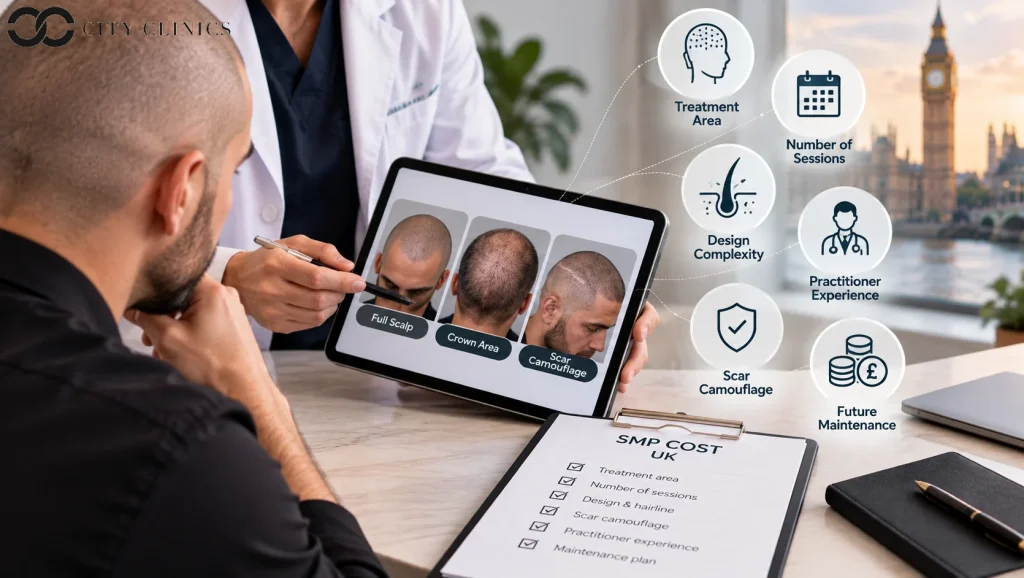
There is no reliable one-size-fits-all answer. The total cost of SMP or hair transplantation depends on the treatment area, the number of sessions or grafts required, practitioner or surgeon experience, the complexity of the case and what is included in the treatment plan.
SMP is generally priced according to the planned treatment area and sessions. Hair transplantation is usually priced according to the surgical plan and the number of grafts or the clinic’s pricing structure. These are different services, so comparing a single session of SMP with a complete hair transplant quote may not give a meaningful picture of overall value.
When comparing clinics, ask for a clear breakdown of the proposed treatment, the number of sessions or grafts, aftercare, follow-up appointments and any potential future maintenance costs.
For SMP-specific information, you can review the City Clinics SMP service and pricing approach. For surgical treatment, the City Clinics FUE page explains its consultation and treatment-planning process.
How to Decide Between SMP and a Hair Transplant
Before choosing either treatment, start with the result you actually want. A clear understanding of your preferred appearance can help make a consultation more productive.
Ask Yourself These Five Questions
- Do I want growing hair or a visual density effect? A transplant can restore growing hair; SMP creates the appearance of follicles.
- What hairstyle do I want to maintain? SMP is particularly associated with a closely shaved appearance, while transplanted hair can grow and be styled.
- Is my donor area suitable for surgery? A surgeon needs to assess donor capacity before recommending a transplant.
- Am I comfortable with the maintenance involved? SMP pigment can soften and may need refreshing, while a transplant requires long-term consideration of continuing hair loss.
- Could a combined approach address my goals? In selected cases, surgery and SMP may serve complementary purposes.
These questions can help clarify your priorities, but they cannot establish medical suitability. A proper assessment is needed before deciding on treatment.
What Should You Ask During a Consultation?
A useful consultation should explain not only what a treatment can achieve, but also its limitations. Before proceeding, consider asking the clinic:
- What is the likely cause and pattern of my hair loss?
- Am I suitable for SMP, hair transplantation or neither at this stage?
- If transplantation is considered, how much suitable donor hair do I have?
- What level of coverage or visual change is realistic for my case?
- How many SMP sessions or transplant procedures might be needed?
- What are the potential risks, limitations and recovery requirements?
- How will future hair loss affect the appearance of the result?
- What follow-up care and possible maintenance should I plan for?
- Who will perform the procedure and who will be responsible for my aftercare?
Ask to see relevant examples of previous work, with clear information about the treatment performed and the time elapsed since treatment. Images should be genuine, appropriately labelled and representative of the procedure being discussed.
Common Mistakes to Avoid When Comparing SMP and Hair Transplants
Assuming Both Treatments Restore Hair Growth
SMP does not create new hair or restore follicles. It is a cosmetic pigmentation procedure. A hair transplant moves living follicles and aims to restore hair growth in the recipient area.
Choosing a Hair Transplant Without Donor Assessment
A transplant plan must account for the finite supply of donor hair and the possibility of future hair loss. A high graft number does not automatically mean a better or more suitable result.
Assuming SMP Is Completely Permanent
SMP is long-lasting, but pigment can gradually soften. Anyone considering the treatment should understand its ageing process and ask whether future refresh sessions may be appropriate.
Comparing Prices Without Comparing the Treatment Plan
A quote should be assessed in the context of what is included. The number of sessions, treatment area, graft plan, aftercare and follow-up arrangements can all affect the overall cost.
Overlooking the Possibility of Combined Treatment
Some people focus on choosing one treatment when their goals may involve more than one concern. A suitable plan may combine hair restoration and cosmetic camouflage, although this requires individual assessment and careful timing.
Frequently Asked Questions About SMP vs Hair Transplant
Is SMP better than a hair transplant?
Neither treatment is universally better. SMP may suit someone who wants a closely shaved appearance, visual density or scar camouflage without surgery. A hair transplant may suit someone who wants growing hair and has sufficient donor supply for a realistic surgical plan. The most appropriate option depends on individual goals and clinical suitability.
Can SMP replace a hair transplant?
SMP can be an alternative for certain cosmetic goals, but it cannot biologically replace a hair transplant. It does not create growing hair or restore follicles. Someone who wants hair that can grow and be styled would need to discuss hair restoration options with a qualified clinician.
Does SMP look like real hair?
SMP is designed to imitate the appearance of closely shaved hair follicles or create the impression of greater density. The result is a visual effect rather than real hair growth. Its appearance depends on factors such as pigment selection, placement, hairline design, skin characteristics and practitioner technique.
Can I have SMP after a hair transplant?
Yes, SMP may be considered after a hair transplant to improve the appearance of density or camouflage a suitable donor scar. The scalp must be sufficiently healed, and the timing should be assessed by the relevant practitioner or treating clinician.
Can SMP hide an FUE or FUT scar?
SMP may help camouflage some scars from previous hair transplant procedures. FUT typically leaves a linear scar, while FUE leaves multiple small extraction marks. The suitability of scar camouflage depends on the scar’s characteristics, skin condition and how it has healed.
What if I do not have enough donor hair for a transplant?
If donor supply is insufficient for the desired surgical coverage, a transplant may not be able to achieve the expected result. SMP does not require donor follicles and may be worth discussing as a cosmetic option. A consultation can help establish which approach is realistic.
Does a hair transplant stop future hair loss?
No. A hair transplant moves follicles into areas affected by hair loss, but it does not stop the underlying process that may cause existing, non-transplanted hair to thin. Long-term planning should account for the possibility of further hair loss. Your clinician can discuss whether additional management is appropriate.
How long does SMP last compared with a hair transplant?
SMP pigment gradually softens over time, and some people may choose a refresh session. Transplanted follicles can continue to grow hair over the long term, although the surrounding native hair may continue to thin. The two treatments have different long-term maintenance considerations and should not be compared as though they work in the same way.
Can SMP and FUE be used together?
They can be combined in selected cases. FUE may be used to restore growing hair, while SMP may help create the appearance of additional density or camouflage a suitable scar. Whether this approach is appropriate depends on the scalp, treatment history, donor supply and desired result.
SMP or Hair Transplant: Explore Your Options at City Clinics
Choosing between SMP and a hair transplant starts with understanding what each treatment can realistically achieve. SMP focuses on the visual appearance of the scalp, while hair transplantation aims to restore growing hair using existing donor follicles. For some people, one approach may be more appropriate; for others, a combination may be worth discussing.
At City Clinics, both scalp micropigmentation and FUE hair transplantation are presented as distinct treatment options. Reviewing the relevant service information can help you understand the procedures before arranging an individual consultation.
If you are considering treatment, discuss your hair-loss pattern, donor capacity, preferred hairstyle, medical history and expectations with the clinical team. A considered recommendation should explain the available options, their limitations and whether treatment is appropriate for your circumstances.
Explore your options: Scalp Micropigmentation at City Clinics | FUE Hair Transplant at City Clinics | View City Clinics Results
Sources and Further Reading
The following clinical and patient-information resources provide further background on scalp micropigmentation and hair transplantation:
- City Clinics – Scalp Micropigmentation: Treatment approach, potential uses, sessions and maintenance information.
- City Clinics – FUE Hair Transplant: FUE procedure, donor-area planning and treatment information.
- Natural Results of Scalp Micropigmentation: A Review – PubMed: Published review discussing SMP techniques and its use in hair-loss and scar camouflage.
- NHS – Hair Transplant: Patient information covering transplant methods, recovery, risks and expected results.
- International Society of Hair Restoration Surgery (ISHRS) – Surgical Treatments: Patient information about surgical hair restoration, including FUE and donor harvesting.
Medical disclaimer: This article is intended for general educational information only. It does not replace an individual medical consultation, diagnosis or treatment recommendation. Hair-loss causes and treatment suitability vary between individuals. Speak with a qualified healthcare professional before making decisions about SMP or hair transplantation.