In this article
At a Glance: Which Female Hair Loss Treatment Options Are Available?1. Start With the Cause of Hair Loss2. Topical Hair-Growth Treatments: A Leading Medical Option3. Other Medical Treatments for Female Hair Thinning4. PRP for Hair Loss in Women5. Female Hair Transplant Surgery: When Can It Be Appropriate?6. Female Hair Transplant Cost: What Should You Compare?7. Non-Surgical Ways to Make Thinning Less Noticeable8. How to Choose the Right Treatment Pathway9. What to Expect From a Female Hair Loss Consultation10. How City Clinics Approaches Female Hair RestorationThere is no single best treatment for female hair loss. The right option depends on why your hair is thinning, how quickly the change has occurred, the pattern of loss and whether the hair follicles are still capable of producing hair. Treatment may involve addressing an underlying medical cause, using topical hair-growth treatments, considering platelet-rich plasma (PRP), or exploring hair transplantation in carefully selected cases.
For many women, surgery is not the first step. A medical assessment can help distinguish female-pattern hair loss from temporary shedding, nutritional deficiencies, thyroid conditions and other causes that may need a different approach. Understanding the cause first can help you compare treatments more realistically and avoid paying for a procedure that may not address the underlying problem.This guide explains the main
female hair loss treatment options
, how they differ, what the evidence says and which questions to ask before choosing a treatment.
At a Glance: Which Female Hair Loss Treatment Options Are Available?
| Treatment option | What it may help with | Important consideration |
|---|---|---|
| Addressing an underlying cause | Hair shedding linked to a condition such as iron deficiency or thyroid dysfunction | Testing and treatment should be guided by symptoms, history and clinical assessment. |
| Topical hair-growth treatment | Female-pattern hair loss and gradual thinning in suitable patients | It needs consistent use; results vary and benefits generally depend on continued treatment. |
| Other medical treatments | Selected cases where a clinician identifies a suitable treatment approach | Some medicines are prescribed off-label and require individual risk assessment. |
| Platelet-rich plasma (PRP) | A non-surgical option that may improve hair density in some patients | Evidence is developing, treatment protocols vary and outcomes may differ between individuals. |
| FUE hair transplant | Selected cases with a suitable, stable donor area and an appropriate pattern of hair loss | It is surgery and does not treat every cause of thinning or prevent future hair loss. |
| Hair fibres, wigs and scalp camouflage | Making visible thinning less noticeable | These options improve appearance rather than treating the underlying cause. |
The table is a general guide, not a personalised treatment recommendation. A qualified healthcare professional can help determine which options are appropriate after assessing your hair loss.
1. Start With the Cause of Hair Loss
Before comparing PRP with surgery, it is important to understand what is causing the thinning. Different types of hair loss can look similar at first, but they may require very different treatment plans.
Female-pattern hair loss
Female-pattern hair loss is a common cause of gradual thinning. It often affects the top of the scalp, where the parting may become wider and the scalp more visible. Hair can become finer over time, and the condition may progress gradually.
Genetic and hormonal factors can contribute. Although female-pattern hair loss may run in families, family history alone does not confirm the diagnosis. A clinician will consider the pattern, history and scalp findings before recommending treatment.
Telogen effluvium and temporary shedding
Telogen effluvium is a type of diffuse shedding that may occur after a physical or emotional stressor. Possible triggers include an illness, surgery, childbirth, significant weight loss or certain nutritional problems. The timing of the shedding and the events in the preceding months can help a clinician assess whether this explanation is likely.
Temporary shedding may improve once the trigger has resolved, although recovery can take time. Persistent or recurrent shedding should be assessed rather than automatically attributed to stress.
Iron deficiency, thyroid problems and other contributors
Iron deficiency, thyroid dysfunction, hormonal changes, some medicines and certain scalp conditions can contribute to hair loss. Not every woman needs the same blood tests. A GP or appropriately qualified clinician can decide whether tests such as a full blood count, ferritin or thyroid function are indicated by the history and examination.
If you are concerned about unexplained shedding, the NHS guidance on hair loss recommends seeking medical advice before going to a commercial hair clinic.
Why this matters: PRP or a hair transplant may not be the appropriate first step if the main problem is an untreated medical condition or temporary shedding. Diagnosis helps establish which treatment, if any, is likely to be useful.
2. Topical Hair-Growth Treatments: A Leading Medical Option
Topical hair-growth treatments are among the options used to manage female-pattern hair loss. Applied to the scalp, they may help slow progression or improve hair growth in some women. They do not work for everyone, and the degree of improvement varies.
These treatments are not suitable for every type of hair loss. Their suitability depends on the diagnosis, the product and strength being considered, and individual circumstances. Follow the product instructions and seek advice from a pharmacist or clinician if you are unsure how to use them.
How long do topical hair-growth treatments take to work?
Hair treatments usually need time before their effects can be assessed. Some treatments may require six months or longer before benefits become noticeable. Temporary increased shedding may occur during the early stages of certain treatments.
Any benefit may depend on continuing treatment as directed. If treatment is stopped, the improvement it provided may gradually be lost.
Are there side effects or precautions?
Possible side effects include scalp irritation, itching, redness or unwanted hair growth if the product spreads to nearby skin. Topical hair-growth treatments should not be used without appropriate advice if you are pregnant, trying to conceive or breastfeeding. Check the product information and speak to a healthcare professional about your circumstances before starting treatment.
Oral hair-growth medication differs from topical treatments. Some oral medicines were originally developed to treat other medical conditions and may be prescribed off-label for selected hair-loss cases. They can have systemic side effects and should only be considered under appropriate medical supervision.
For an overview of available treatment options, read the British Association of Dermatologists’ guidance on female-pattern hair loss.
3. Other Medical Treatments for Female Hair Thinning
Depending on the diagnosis, a clinician may discuss other medical treatments alongside or instead of topical hair-growth treatments. These options are not suitable for everyone, and some are used off-label for female-pattern hair loss.
For example, anti-androgen medicines may be considered in selected cases, taking account of the patient’s medical history, potential side effects and pregnancy-related precautions. The decision requires individual clinical judgement; these medicines should not be started or adjusted without a prescriber’s advice.
Certain prescription hair-loss medicines are commonly associated with treatment for male-pattern hair loss but are not routine options for women. The NHS advises women not to use some of these medicines. Do not start prescription hair-loss treatments based on advice intended for another patient or on information from social media.
If a deficiency or another medical contributor is identified, treating that problem may be more appropriate than adding a hair-specific procedure. Supplements should not be assumed to improve hair growth when there is no relevant deficiency.
4. PRP for Hair Loss in Women
Platelet-rich plasma, usually called PRP, is a non-surgical treatment that uses a sample of the patient’s own blood. The blood is processed to concentrate platelets in plasma, which is then injected into selected areas of the scalp.
Platelets release growth factors involved in normal tissue processes. Researchers have studied PRP for its potential to support hair density and reduce shedding in certain types of hair loss. Results may vary depending on the patient and treatment protocol.
Does PRP work for female hair loss?
Research suggests PRP may improve hair density in some people with hair loss. A 2025 systematic review and meta-analysis examined 43 randomised controlled trials involving 1,877 participants. The authors reported potential benefits for hair density and hair loss, but also highlighted differences between studies and the need for better-standardised research.
These findings are encouraging, but they do not mean that every PRP protocol is equally effective or that every patient will respond. Evidence for a treatment should be considered alongside the diagnosis, the quality of the studies and the individual’s circumstances.
PRP may be discussed as a non-surgical option for some women, including selected cases of pattern thinning. However, it should not be described as automatically preferable for all diffuse hair loss. The cause and pattern of the loss still need to be assessed.
How many PRP sessions are needed?
There is no single treatment schedule that applies to every patient or clinic. The number and spacing of sessions depend on the protocol being offered and the clinical plan. Before paying for a course, ask how the clinic assesses progress, what maintenance may involve, what is included in the quoted cost and what happens if there is little improvement.
What are the possible downsides?
PRP involves injections and may cause temporary tenderness, redness, swelling or bruising. Suitability also depends on the patient’s medical circumstances. A clinician should explain the likely benefits, uncertainties, potential risks and alternatives before treatment.
You can read about the procedure offered by City Clinics on its PRP and Mesotherapy page. Clinic-specific descriptions of treatment and session schedules should be understood as information about that provider, not a universal medical protocol.
5. Female Hair Transplant Surgery: When Can It Be Appropriate?
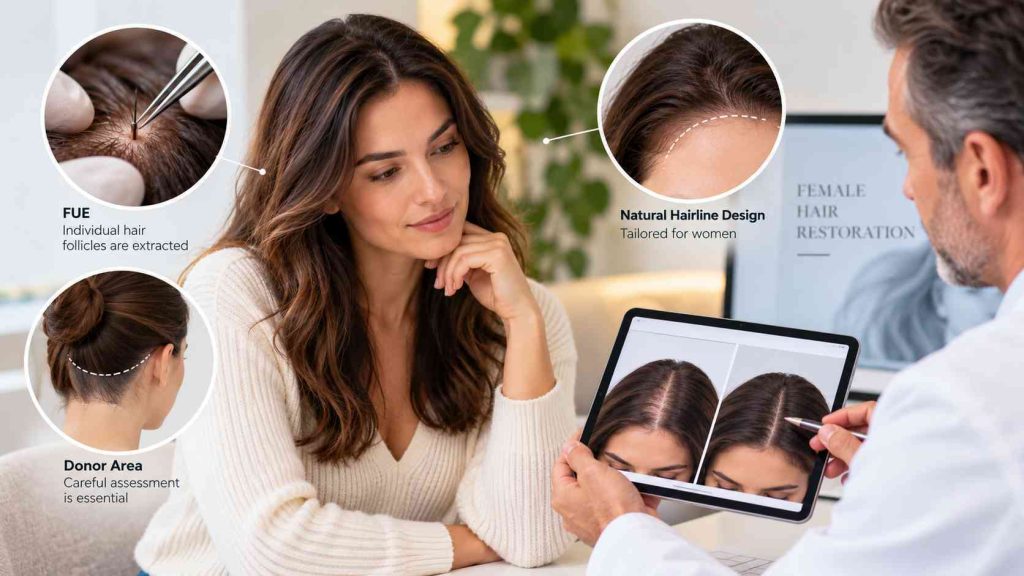
A hair transplant moves hair follicles from a donor area, usually at the back or sides of the scalp, into selected areas where greater coverage is desired. Follicular unit extraction (FUE) is one technique used to collect individual follicular units before they are placed into the recipient area.
Female hair transplantation can be appropriate for some women, but it is not the right option for every pattern of thinning. Careful assessment is particularly important because hair loss in women may be diffuse and can sometimes affect the donor area as well as the visible thinning area.
Who may be a suitable candidate?
A clinician may consider surgery where the pattern of loss is sufficiently defined, the donor area has suitable density and stability, and the expected benefit is realistic. Examples may include selected cases of a widened parting, localised hairline loss or traction-related loss once the condition is appropriately assessed and stable.
By contrast, women with active, widespread shedding or diffuse thinning that also affects the donor area may not be suitable candidates. A transplant does not treat the underlying cause of hair loss, and existing hair around the transplanted area may continue to thin over time.
Does female FUE require shaving the head?
Preparation depends on the individual surgical plan and the technique used. Some female FUE procedures may use partial or discreet donor-area preparation, while other cases require more extensive shaving. Ask the surgeon to explain exactly what will be trimmed or shaved, how visible it may be and how long it is likely to take to grow out.
What should you know about recovery and results?
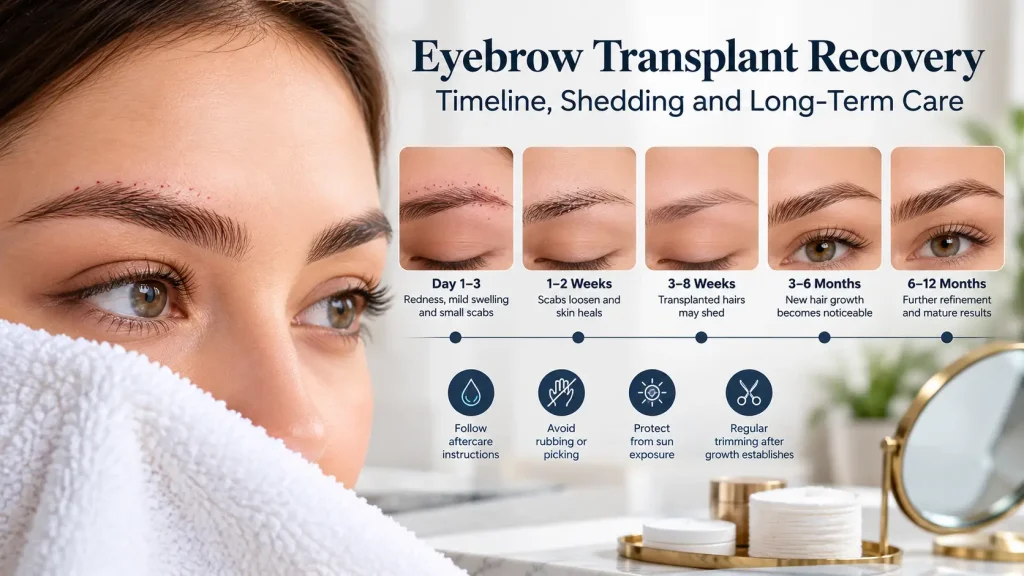
Hair transplantation is a surgical procedure, so it involves recovery time and potential risks, including bleeding, infection, scarring and an unsatisfactory cosmetic result. Transplanted hairs commonly shed in the weeks after surgery before new growth becomes visible. The final result takes time to develop and varies between individuals.
It is also important to plan for future hair loss. The surgeon should discuss how the design may look if the surrounding natural hair continues to thin and whether ongoing medical management may be appropriate.
For a broader overview of the procedure, recovery and risks, see the NHS guide to hair transplants.
6. Female Hair Transplant Cost: What Should You Compare?
The cost of a female hair transplant varies according to the extent of the area being treated, the number of grafts, the complexity of the plan, the surgeon’s experience and the services included in the package. PRP and medical treatments have their own costs and may involve repeat appointments or ongoing use.
It is better to compare the complete treatment plan than to choose a clinic based on a headline price alone. Ask for a written breakdown and check whether the quote includes consultation, surgery, aftercare, follow-up appointments and any recommended additional treatment.
Before making a decision, ask:
- Who will assess me, and who will perform the procedure?
- How many similar female cases has the surgeon treated?
- Why is this treatment more appropriate than the alternatives?
- How many grafts are being proposed, and what is the rationale?
- What are the risks, likely limitations and possible additional costs?
- What aftercare and follow-up are included?
- What happens if the result is less than expected or a complication develops?
The NHS advises people considering a transplant in England to check clinic registration and the surgeon’s qualifications and experience. You can review its hair transplant guidance before comparing providers.
7. Non-Surgical Ways to Make Thinning Less Noticeable
Not every useful option needs to stimulate growth or involve surgery. Depending on the extent of thinning and personal preference, cosmetic approaches can help improve the appearance of coverage while the underlying cause is being assessed or treated.
- Hair fibres and scalp concealers: These can make the scalp less visible through the hair, although they may need reapplication and can be affected by water or perspiration.
- Wigs and hairpieces: These offer coverage without medical treatment and can be useful for more extensive hair loss.
- Hairstyle adjustments: A different parting or cut may help disguise some areas of thinning.
- Scalp micropigmentation: This cosmetic procedure uses pigment to create the appearance of greater density or a closely shaved look. It does not regrow hair and requires careful consideration of the desired appearance and maintenance.
These options can be used on their own or alongside an appropriate medical plan. Choosing camouflage does not mean you have to pursue medication or surgery.
8. How to Choose the Right Treatment Pathway
There is no fixed sequence that works for every woman, but a diagnosis-led approach can help organise the decision.
- Investigate: Arrange an assessment to understand the pattern of hair loss and identify any likely underlying cause. Further examination or tests may be appropriate.
- Treat the cause where possible: If a reversible contributor is identified, address it with appropriate medical advice rather than assuming a procedure is needed.
- Discuss suitable medical options: For female-pattern hair loss, ask whether topical hair-growth treatments or other clinician-guided options are appropriate.
- Consider non-surgical procedures selectively: Ask about PRP if it fits your diagnosis and priorities, including the limitations of the evidence, costs and possible need for repeat sessions.
- Assess surgical suitability: Consider FUE only after the pattern of loss, donor supply, future progression and realistic cosmetic goals have been evaluated.
- Agree on follow-up: Ask how progress will be measured, when results should be reviewed and what the next step would be if the treatment does not help.
This is a general framework rather than a rule that everyone must follow. The right pathway depends on the diagnosis, medical history, treatment preferences and clinical assessment.
9. What to Expect From a Female Hair Loss Consultation
A useful consultation should be about more than choosing a treatment from a menu. It should establish what may be causing the hair loss, explain the available options and make clear when a treatment is unlikely to help.
Depending on the situation, an assessment may cover:
- When the shedding or thinning began and how it has changed.
- Whether the loss is gradual, sudden, diffuse or concentrated in particular areas.
- Recent illness, childbirth, weight change, stress, medication changes or other relevant events.
- Family history, menstrual or hormonal symptoms and other health factors where relevant.
- Scalp examination and any further tests or specialist referral that may be needed.
- The potential benefits, limitations, costs and risks of each suitable treatment.
Be cautious of any provider who recommends surgery before assessing the cause and pattern of your hair loss, or who presents a particular treatment as certain to work. Good decision-making includes discussing when treatment is not suitable.
10. How City Clinics Approaches Female Hair Restoration
City Clinics describes its female hair restoration pathway around three routes: investigating potentially treatable causes, supporting existing hair with appropriate non-surgical care