In this article
Who May Be Suitable for a Beard Transplant?1. You Have a Clear and Realistic Goal2. You Have Sufficient Donor Hair3. Your Facial-Hair Pattern Has Been Assessed Properly4. You Have Patchy Beard Growth That May Benefit From Treatment5. Your Skin Is Suitable for Treatment6. You Understand the Limitations and Risks7. You Are Prepared for the Recovery and Growth TimelineWhen Might a Beard Transplant Not Be the Right Choice?Why Donor Conservation Matters for Future Hair RestorationHow to Choose a Beard Transplant Clinic in the UKConsidering a Beard Transplant at City Clinics?Frequently Asked Questions About Beard Transplant CandidatesFinal Thoughts: Is a Beard Transplant Right for You?Medical DisclaimerA good beard transplant candidate is someone with a clear reason for wanting facial hair restoration, sufficient suitable donor hair and realistic expectations about the result. Suitability also depends on the cause of patchy growth, facial-hair development, skin condition, previous hair transplant procedures and overall medical circumstances. A consultation with a qualified clinician is needed to determine whether surgery is appropriate or whether another approach would be more suitable.At
City Clinics’ beard transplant service
in London, prospective patients can learn about follicular unit extraction (FUE), beard design, donor hair planning and the consultation process.
The most important point: having a patchy beard does not automatically make you a suitable candidate for surgery. The decision should be based on an individual assessment of your goals, available donor hair, clinical circumstances and the likely benefits and limitations of treatment.
Who May Be Suitable for a Beard Transplant?
A beard transplant may be an option for adults who want to improve facial hair coverage, address selected areas of sparse growth or reconstruct hair in an area affected by scarring. The appropriate treatment depends on the reason for the missing hair and whether enough suitable donor follicles are available.
Common reasons for considering a beard transplant include:
- Patchy cheek growth: areas where facial hair is naturally sparse or uneven.
- Gaps in the beard: spaces along the jawline, chin or moustache that do not connect with surrounding hair.
- Limited natural beard density: a desire for greater coverage where existing facial hair is insufficient for the preferred style.
- Selected scar-reconstruction cases: areas where acne scarring, injury or previous surgery has affected hair growth, provided the skin is suitable for treatment.
- Moustache or goatee enhancement: carefully planned restoration in selected areas of the upper lip, chin or surrounding facial hair.
These are potential reasons to seek an assessment, not automatic indications for surgery. A clinician must consider the underlying cause, donor supply, skin condition and expected benefit before recommending treatment.
For an overview of the procedure, read the City Clinics beard transplant guide.
1. You Have a Clear and Realistic Goal
One of the first considerations is what you want to achieve.
Some people want to fill small gaps in their cheeks. Others want to improve moustache connections, create a more defined jawline beard or increase coverage across several facial areas.
These goals can require different treatment plans. A small area of missing hair may need a different number of grafts and a different placement strategy from a patient seeking fuller coverage across the cheeks, chin and jawline.
Before recommending surgery, a clinician should understand:
- Which areas you want to improve.
- How your existing beard grows.
- What beard style you would like to achieve.
- How much coverage may be realistic.
- Whether the proposed result is compatible with your available donor hair.
The objective is not necessarily to create the densest possible beard. It is to establish whether the requested design is achievable while respecting the natural growth pattern of your facial hair.
A useful starting point is to bring reference photographs of beard styles you like to your consultation. These can help explain your preferences, although they should not be treated as a prediction of your personal result.
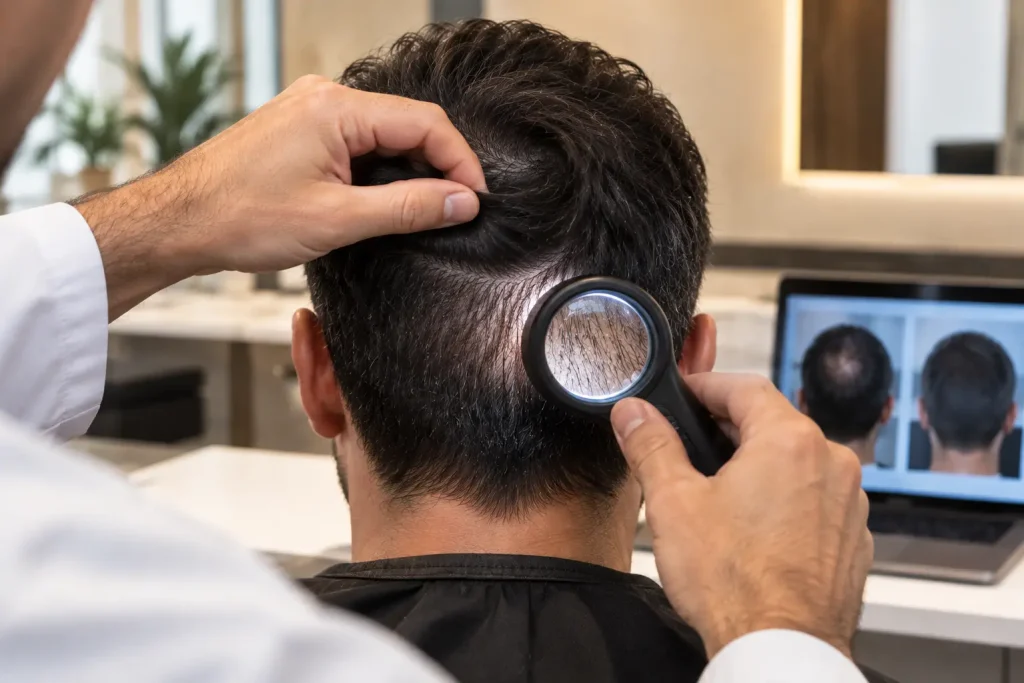
2. You Have Sufficient Donor Hair
Donor hair availability is one of the most important considerations in beard transplant candidacy.
In FUE beard transplantation, individual follicular units are extracted from a donor area, commonly the back and sides of the scalp, and transplanted into carefully selected areas of the face.
The number of suitable follicles available helps determine the scale of treatment that may be possible.
Why Donor Supply Matters
Your donor hair is finite. Follicles used for beard restoration may no longer be available for future scalp restoration, so the decision should be considered as part of your longer-term hair restoration plan.
This is particularly relevant if you:
- Have previously undergone a scalp hair transplant.
- Are considering a scalp transplant as well as beard restoration.
- Have limited donor density.
- Want extensive beard coverage.
- May require further hair restoration procedures in the future.
Previous scalp transplantation does not automatically exclude you from beard restoration. However, the remaining donor supply must be assessed carefully.
A consultation should establish whether your donor area can support the proposed beard design without an unreasonable compromise to your existing or future hair restoration needs.
How Many Grafts Does a Beard Transplant Need?
The number of grafts depends on the area being treated, the existing hair pattern, the desired coverage and the available donor supply.
A small patch or moustache area may require substantially fewer grafts than a full-beard restoration. City Clinics discusses the possibility of cases ranging from a few hundred grafts to 2,000 or more, depending on the treatment plan. These figures are illustrative rather than a recommendation for an individual patient.
Your own graft requirement should be established through clinical assessment and an agreed treatment design.
For a broader understanding of the relationship between hair restoration procedures, see the City Clinics FUE hair transplant service.
3. Your Facial-Hair Pattern Has Been Assessed Properly
Facial hair development varies between individuals. Genetics, age, hormones and other factors can influence beard density and distribution.
Someone whose beard is still developing may benefit from waiting before making an irreversible cosmetic decision. However, there is no single age that establishes suitability for every person.
Rather than relying on an arbitrary age threshold, the clinician should consider your individual development, the stability of your current pattern, your medical history and whether the proposed design is likely to remain appropriate over time.
Why Waiting Can Sometimes Be Sensible
If natural facial hair is still developing, a transplant performed too early may not reflect the beard pattern that emerges later.
For example, the areas that appear sparse today may change as your facial hair matures. A design based on an early pattern could therefore become less suitable as surrounding hair develops.
A clinician may recommend reassessing your beard later if waiting is likely to provide a clearer picture of your natural growth.
A beard transplant should be planned around your longer-term facial-hair pattern, not just your current appearance.
4. You Have Patchy Beard Growth That May Benefit From Treatment
Patchy beard growth is a common reason people investigate facial hair restoration, but its cause matters.
For some people, sparse cheeks or gaps along the jawline reflect their natural genetic pattern. For others, missing hair may be associated with scarring or a medical condition that requires assessment.
A transplant may be worth discussing when the pattern is stable, the treatment area is suitable and the expected cosmetic benefit justifies surgery.
When Patchiness Needs Further Investigation
Sudden or unexplained beard hair loss should not automatically be treated as a cosmetic problem.
For example, alopecia areata can cause patches of hair loss, including in the beard. Other skin or medical conditions may also affect facial hair.
If you have developed new bald patches, inflammation or unexplained changes in beard growth, seek an appropriate medical assessment before considering transplantation. The cause should be understood before deciding whether surgery is appropriate.
Is a Beard Transplant Always Necessary for a Patchy Beard?
No. Some people are comfortable with their natural beard pattern, while others may prefer grooming techniques or other approaches.
Depending on the underlying cause, a clinician may discuss observation, medical assessment or suitable non-surgical options before recommending surgery.
In the UK, facial hair growth treatments may be discussed with a qualified healthcare professional. Their suitability, potential side effects and supporting evidence should be assessed on an individual basis rather than assuming a particular treatment is appropriate for everyone.
The right choice depends on the cause of the patchiness, your preferences and the options that are clinically appropriate.
5. Your Skin Is Suitable for Treatment
The condition of the treatment area is another consideration in beard transplant candidacy.
Active acne, eczema, inflammation, infection or other skin problems may affect the timing or suitability of surgery. These conditions should be assessed before proceeding.
This does not mean that every person with a history of acne or a skin condition is unsuitable for a beard transplant. The important distinction is between a history of a condition and an active problem that may need treatment first.
What If You Have Facial Scars?
Selected scars may be considered for facial hair restoration, but the suitability of scar tissue depends on its characteristics, blood supply, location and other clinical factors.
A clinician should examine the area and explain whether transplantation is reasonable, what limitations may apply and whether other approaches would be more appropriate.
Scar reconstruction can be more complex than treating naturally sparse beard growth. It should therefore be assessed individually rather than assumed to produce the same result as transplantation into unaffected skin.
6. You Understand the Limitations and Risks
A suitable candidate understands that beard transplantation is a surgical procedure and that the outcome can vary.
Although FUE is designed to move individual follicular units without a long strip incision, it still involves extraction, recipient-site creation and a healing period.
Potential risks and limitations may include:
- Bleeding, swelling or discomfort.
- Infection or inflammation.
- Scarring in the donor or recipient areas.
- Poor or uneven growth.
- A result that differs from the intended appearance.
- An unnatural appearance if hair direction, angle or density is poorly planned.
- Limited donor supply for future procedures.
Your surgeon should explain the relevant risks in the context of your circumstances, together with the proposed treatment, recovery arrangements and follow-up.
The NHS guidance on hair transplants also advises people considering hair transplantation to investigate the clinic, check the surgeon’s qualifications and understand the risks before proceeding.
Why Natural Hair Direction Matters
Beard hair does not grow in a single uniform direction. The cheeks, moustache, chin and jawline each have characteristic growth patterns.
A 2024 review published in Facial Plastic Surgery Clinics of North America discusses graft selection, acute placement angles and aesthetic design as important technical considerations in facial hair restoration.
This is particularly relevant to beard transplantation because transplanted hairs must blend with existing facial hair rather than simply increase the number of visible follicles.
Read the clinical review, Facial Hair in Hair Restoration Surgery: Beard Transplantation and Beard-To-Scalp Hair Restoration.
7. You Are Prepared for the Recovery and Growth Timeline
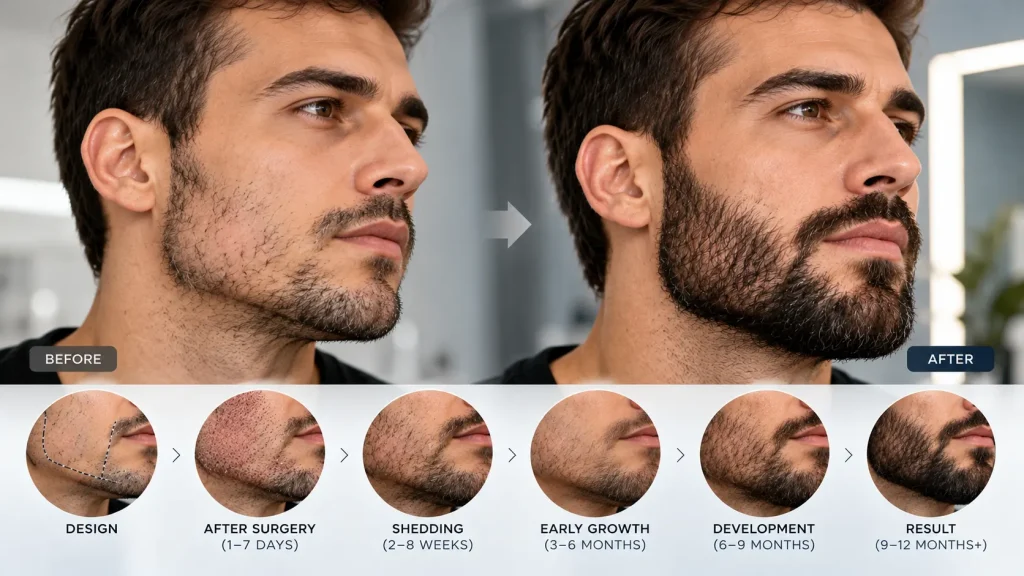
A beard transplant does not produce its final appearance immediately after surgery.
Transplanted hair shafts commonly shed during the early weeks. New growth may become visible over the following months, with further development occurring as the hair matures.
The precise timeline varies, so patients should follow their treating clinician’s instructions and attend the recommended follow-up appointments.
Before proceeding, consider whether you can:
- Follow the postoperative care instructions.
- Protect the treated area during early healing.
- Attend the recommended reviews.
- Allow sufficient time for growth to develop.
- Discuss unexpected symptoms or concerns with the clinical team.
City Clinics describes its beard transplant procedure and treatment pathway on its beard transplant page. Its aftercare information also explains the clinic’s approach to postoperative support.
Ask the clinic to confirm the specific aftercare arrangements included in your proposed treatment plan.
When Might a Beard Transplant Not Be the Right Choice?
A beard transplant may need to be postponed or may not be appropriate in certain circumstances.
Insufficient donor hair: The available follicles may not support the proposed design.
Ongoing facial-hair loss: An unexplained or potentially treatable cause should be investigated before cosmetic surgery is considered.
Active skin problems: The treatment area may need assessment or management before surgery.
An immature or changing beard pattern: Waiting may help establish a more suitable long-term design.
Unrealistic expectations: The requested density or shape may exceed what the available donor supply can reasonably support.
Medical factors affecting surgery: Your medical history, medication and other circumstances may influence the risks or suitability of treatment.
These considerations do not automatically mean that a person can never have a beard transplant. They indicate why an individual assessment is necessary.
A responsible clinician should explain when surgery is reasonable, when further investigation is needed and when another option may be preferable.
Why Donor Conservation Matters for Future Hair Restoration
One issue that deserves particular attention is the relationship between beard transplantation and scalp hair restoration.
Both procedures may use follicles from the same scalp donor area. Although the donor region has a finite supply, the amount available differs between individuals.
If you are already experiencing scalp hair loss, planning a beard transplant without considering possible future scalp treatment may limit your options later.
This does not mean that beard restoration should always take second place. It means the decision should consider the complete picture.
A useful consultation should address:
- Your current scalp and facial-hair pattern.
- Previous hair restoration procedures.
- The condition and density of the donor area.
- Your expected long-term hair restoration needs.
- The proposed allocation of donor follicles.
- Whether a smaller treatment or a staged approach would be more appropriate.
A good plan should explain not only what may be achievable today but also how the use of donor hair could affect future choices.
How to Choose a Beard Transplant Clinic in the UK
Choosing a clinic involves more than comparing advertised prices or looking at selected before-and-after photographs.
For UK patients, it is important to understand who will assess you, who will perform the surgical stages, how the treatment is planned and what happens if you experience a complication or are concerned about the result.
The NHS recommends checking clinic registration and verifying the qualifications of the doctor performing the procedure. For procedures carried out in England, you can use the Care Quality Commission website to check a provider’s registration and available inspection information, and the General Medical Council medical register to check a doctor’s registration and licence to practise.
What Should You Ask During a Consultation?
Consider asking the following questions:
- Who will assess my suitability and design my beard?
- Which surgical stages will the surgeon personally perform?
- What experience does the treating surgeon have with beard transplantation?
- How much donor hair is available, and how will it be allocated?
- How many grafts are proposed, and why?
- What are the main risks in my circumstances?
- Can I see documented cases with a starting beard pattern similar to mine?
- When were the results photographs taken?
- What follow-up and aftercare are included?
- What happens if growth is slower than expected or complications develop?
- Would waiting or a non-surgical alternative be reasonable in my case?
You can also read the International Society of Hair Restoration Surgery’s consumer advocacy guidance for additional information about choosing a hair restoration provider.
Considering a Beard Transplant at City Clinics?
City Clinics provides beard transplantation information for patients considering facial hair restoration in London.
Its published service page describes FUE treatment, donor hair extraction, individual beard design and the importance of matching the placement angle to natural facial hair growth.
Before deciding whether to proceed, review the City Clinics beard transplant service and arrange a consultation to discuss your goals, medical circumstances, donor supply and available treatment options.
The purpose of the consultation should be to establish whether treatment is appropriate for you, not simply to determine how many grafts can be used.
City Clinics
82 Harley Street
London W1G 7HN
Telephone: +44 (0)20 7018 9060
You can learn more about the clinic’s treatment pathway and arrange a discussion through the City Clinics consultation page.
Frequently Asked Questions About Beard Transplant Candidates
Who is suitable for a beard transplant?
Adults with a clear treatment goal, suitable donor hair and realistic expectations may be candidates for beard transplantation. Suitability also depends on the cause of sparse growth, skin condition, medical history and the proposed design. A qualified clinician must assess the individual case before recommending surgery.
Can I get a beard transplant if I have patchy cheeks?
Potentially. A beard transplant may help fill selected areas of sparse cheek growth when the treatment area is suitable and enough donor hair is available. The cause of the patchiness should be established before treatment is considered.
Does a previous scalp hair transplant affect beard transplant candidacy?
It can. Scalp and beard procedures may draw on the same finite donor supply. Previous transplantation does not automatically rule out beard restoration, but the remaining donor area should be assessed before a treatment plan is agreed.
What is the best age for a beard transplant?
There is no single age that establishes suitability for everyone. Facial hair can continue developing into adulthood, so a clinician should consider the maturity and stability of your beard pattern alongside your goals and medical circumstances. Waiting may be sensible if your natural growth is still changing.
Can a beard transplant treat facial scars?
Selected scars may be suitable for hair transplantation, but the scar tissue must be assessed. Factors such as the condition of the skin, blood supply and the extent of the scar can influence whether surgery is appropriate.
How many grafts do I need for a beard transplant?
The number depends on the size of the area, existing facial hair, desired coverage and available donor supply. Small areas may need fewer grafts than a full-beard restoration. Your clinician should explain the proposed number and the reasoning behind it.
Can I improve my beard without surgery?
Depending on the cause of sparse growth, alternatives may include accepting your natural pattern, changing your beard style or seeking medical assessment for an underlying condition. The most appropriate approach depends on your individual circumstances and should be discussed with a qualified healthcare professional where necessary.
Is a beard transplant permanent?
Transplanted follicles are intended to provide long-lasting growth, but individual results can vary. The appearance depends on factors such as graft survival, donor characteristics, placement and subsequent changes in surrounding hair. A clinician should explain the expected longevity and limitations of treatment.
How do I know if a beard transplant is right for me?
The most useful first step is an individual clinical consultation. This should cover your goals, the cause of sparse facial hair, donor supply, medical history, risks, alternatives and expected recovery. You can begin by reviewing the City Clinics beard transplant service.
Final Thoughts: Is a Beard Transplant Right for You?
A beard transplant may be worth considering if you want to address persistent gaps, improve selected areas of facial hair coverage or reconstruct hair in a suitable scarred area.
However, a good candidate is not simply someone who wants a fuller beard. Suitability depends on the available donor hair, the cause and stability of the existing pattern, skin condition, medical circumstances and realistic expectations.
For patients in the UK, choosing an appropriately qualified clinician and understanding the complete treatment pathway are important parts of making an informed decision.
If you are considering beard restoration in London, visit the City Clinics beard transplant page to learn more about the procedure and discuss your suitability with the clinical team.
Medical Disclaimer
This article is intended for general educational purposes and does not replace an individual medical assessment, diagnosis or treatment plan. Beard transplant suitability should be determined by an appropriately qualified clinician after considering the patient’s medical history, donor hair availability, skin condition and treatment goals.