In this article
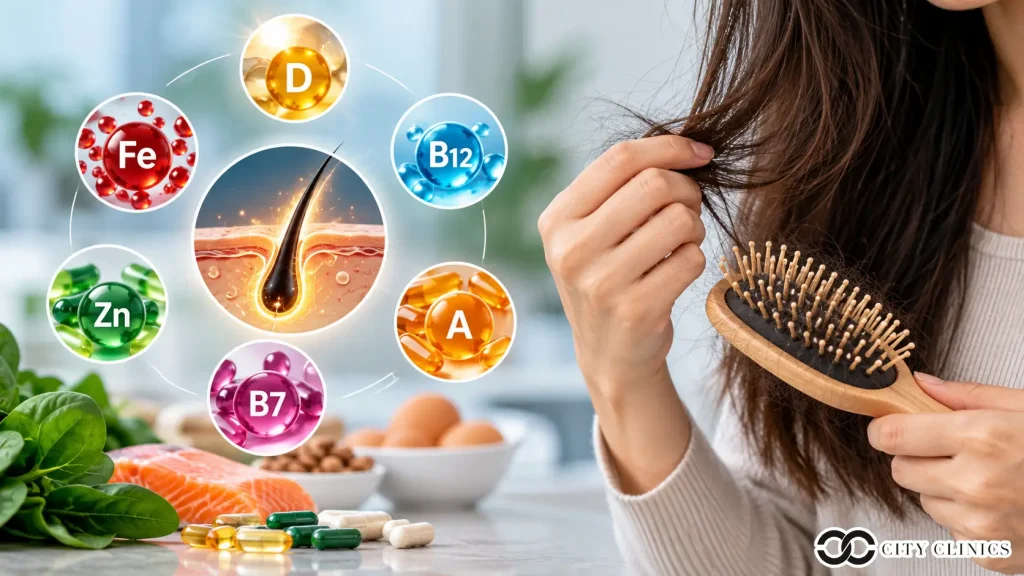
Why Symptoms Alone Don’t Tell You MuchWhich Vitamins and Nutrients Are Linked to Hair Loss?1. Iron Deficiency and Hair Loss2. Vitamin D and Hair Loss3. Vitamin B12 Deficiency4. Biotin: The Hair-Loss Supplement Everyone Talks About5. Zinc and Hair Loss6. Can Too Much Vitamin A Cause Hair Loss?What About Vitamin Deficiency and Telogen Effluvium?How Do You Know If a Vitamin Deficiency Is Causing Your Hair Loss?Should You Take a Hair-Loss Supplement?When Should You Speak to a GP About Hair Loss?The Bottom Line: Which Vitamin Deficiency Causes Hair Loss?Frequently Asked QuestionsWhat vitamin deficiency causes the most hair loss?Can low vitamin D cause hair loss?Can B12 deficiency cause hair loss?Does biotin help hair grow?Should I take vitamins if my hair is falling out?What blood tests are done for hair loss?Can iron deficiency cause hair shedding without anaemia?When should I see a doctor about hair loss?Hair Loss Assessment in Harley Street, LondonHair loss can sometimes be linked to a vitamin or mineral deficiency, but taking supplements is not automatically the answer. Iron deficiency, vitamin D deficiency, vitamin B12 deficiency and, less commonly, zinc or biotin deficiency can be associated with increased hair shedding. However, hair loss has many other possible causes, including genetics, hormonal changes, illness, stress, weight loss and certain medications.
If you’re searching “which vitamin deficiency causes hair loss?”, the most useful answer is: there isn’t one vitamin deficiency responsible for all hair loss. The right approach is to identify whether a deficiency is actually present rather than treating hair loss with supplements based on symptoms alone.
For persistent or sudden hair shedding, a GP assessment and appropriate blood tests can help determine whether nutritional deficiency is contributing to the problem.
| Quick answer Iron deficiency is one of the better-established nutritional contributors to diffuse hair shedding. Vitamin D and B12 deficiency may also be relevant in particular people, while true biotin deficiency is uncommon. Supplementation is most useful when a genuine deficiency or increased requirement has been identified. |
Why Symptoms Alone Don’t Tell You Much
Diffuse thinning, increased shedding and slower regrowth can occur across many different causes of hair loss, including nutritional deficiency, telogen effluvium, hormonal changes and genetic hair loss. Two people with similar-looking shedding can therefore have very different underlying causes.
A symptom checklist cannot reliably establish whether a nutrient is low. Where clinically appropriate, a GP can use medical history, examination and blood tests to investigate possible contributors rather than relying on self-diagnosis.
Which Vitamins and Nutrients Are Linked to Hair Loss?
| Nutrient | Can deficiency be associated with hair loss? | What to know |
| Iron | Yes | Iron deficiency and iron-deficiency anaemia can contribute to diffuse shedding. |
| Vitamin D | Possible association | Low vitamin D is common in the UK; supplementation should not automatically be treated as a hair-loss treatment. |
| Vitamin B12 | Potentially | Risk is higher with some restrictive diets, absorption problems and certain medicines. |
| Zinc | Yes | Deficiency can contribute, but excessive supplementation can also cause problems. |
| Biotin (B7) | Rarely | True deficiency is uncommon; high-dose biotin can interfere with some blood tests. |
| Vitamin A | Excess can contribute | Both inadequate and excessive intake can be problematic; high retinol intake needs particular caution. |
1. Iron Deficiency and Hair Loss
Iron is one of the most important nutritional factors to consider when someone has unexplained diffuse hair shedding. Iron-deficiency anaemia can include hair loss among its symptoms, alongside tiredness, shortness of breath and paler skin.
Source: NHS — Iron deficiency anaemia
Iron is needed to make haemoglobin, which carries oxygen around the body. Iron deficiency can have several causes. In women of reproductive age, heavy menstrual bleeding is an important risk factor; pregnancy also increases iron requirements. Other causes can include blood loss or problems absorbing iron.
A GP may use blood tests such as a full blood count (FBC) and may assess iron stores, including ferritin, depending on the clinical situation. Do not assume that hair shedding automatically means you need an iron supplement; the reason for any low iron should also be assessed.
2. Vitamin D and Hair Loss
Vitamin D is frequently mentioned in searches for “vitamins for balding”, but the relationship needs context. Research has reported associations between low vitamin D levels and several types of hair loss, but an association does not automatically prove that supplementation will reverse hair loss.
Vitamin D deficiency is nevertheless worth addressing for general health. NHS guidance says adults and children over 4 should consider a daily 10 microgram vitamin D supplement during autumn and winter, while some people at higher risk of deficiency are advised to take it throughout the year.
Source: NHS — Vitamin D
If a blood test identifies vitamin D deficiency, correcting it is appropriate for health reasons. Whether it changes hair shedding is a separate clinical question.
3. Vitamin B12 Deficiency
Vitamin B12 deficiency can contribute to a range of health problems and may be relevant when investigating hair concerns, although it is not the most common explanation for hair loss.
People who do not regularly consume animal products, particularly vegans without reliable B12-fortified foods or supplements, can be at increased risk. Certain medical conditions and medicines can also affect B12 absorption or levels. NHS guidance specifically lists proton pump inhibitors and metformin among medicines that can reduce B12 levels.
Source: NHS — Vitamin B12 or folate deficiency anaemia: causes
If your diet or medical history puts you at risk, a GP can decide whether B12 testing is appropriate.
4. Biotin: The Hair-Loss Supplement Everyone Talks About
Biotin, also known as vitamin B7, is widely promoted in hair, skin and nail supplements. However, there is an important difference between biotin being necessary for normal health and biotin supplements being an effective treatment for ordinary hair loss.
True biotin deficiency is uncommon in people eating a varied diet. High-dose biotin can also interfere with some laboratory immunoassays, potentially producing misleading results.
Source: Manchester University NHS Foundation Trust — Biotin and laboratory test interference
If you take a high-dose biotin or “hair, skin and nails” supplement, tell your GP or healthcare professional before having blood tests.
5. Zinc and Hair Loss
A genuine zinc deficiency can affect normal body functions and may contribute to hair problems. However, taking large amounts of zinc without medical advice is not a good strategy.
NHS guidance says adults should generally be able to obtain their zinc requirements from a varied diet and advises adults not to take more than 25mg of zinc supplements per day unless advised by a doctor. Excess zinc can reduce copper absorption and cause problems.
Source: NHS Wales — Vitamins and minerals: Zinc
Zinc is therefore another example of why “more” is not necessarily better.
6. Can Too Much Vitamin A Cause Hair Loss?
Vitamin A is essential, but excessive intake can be harmful. This matters when people combine multivitamins, supplements and products marketed for hair growth.
NHS guidance advises caution with high retinol intake and states that people at risk of osteoporosis should limit retinol intake to no more than 1.5mg (1,500 micrograms) a day. Pregnant people should avoid supplements containing vitamin A in the form of retinol because excessive vitamin A can harm fetal development.
Source: NHS — Vitamin A
Because individual circumstances vary, anyone who is pregnant, planning pregnancy or taking several supplements should seek appropriate professional advice.
What About Vitamin Deficiency and Telogen Effluvium?
Nutritional deficiency and stress-related hair shedding can overlap. Telogen effluvium is a form of diffuse shedding that can follow a significant physiological or psychological stressor.
Possible triggers include significant illness or fever, surgery, psychological stress, rapid weight loss, unusual diets, nutritional deficiency, certain medicines and endocrine disorders.
Source: DermNet — Telogen effluvium
This is why sudden, diffuse shedding may be investigated from more than one angle rather than automatically being labelled as either “nutritional” or “stress-related”.
How Do You Know If a Vitamin Deficiency Is Causing Your Hair Loss?
Symptoms alone usually are not enough. Hair shedding can occur with iron deficiency, vitamin deficiency, telogen effluvium, thyroid problems, hormonal changes, androgenetic alopecia, medication effects and other conditions.
Depending on your symptoms and medical history, a GP may consider tests related to anaemia, iron status, thyroid function or particular nutritional deficiencies where clinically appropriate. There is no single blood-test panel that is suitable for every person with hair loss.
The exact tests should be determined by a clinician rather than assuming that everyone with hair loss needs the same set of investigations.
Should You Take a Hair-Loss Supplement?
Not automatically. If testing confirms a genuine nutritional deficiency, correcting that deficiency is important and may reduce shedding when the deficiency is contributing to the problem.
If nutrient levels are normal, however, taking increasingly high doses of supplements is unlikely to solve hair loss caused by another condition. Unnecessary supplementation can also introduce avoidable risks.
- Excess zinc can reduce copper absorption.
- Excess vitamin A can be harmful.
- High-dose biotin can interfere with some laboratory tests.
- Iron supplements can cause side effects and should not be taken simply because hair is shedding without an appropriate reason.
When Should You Speak to a GP About Hair Loss?
- Sudden or unexplained hair shedding
- Persistent diffuse thinning
- Hair loss accompanied by significant tiredness or other symptoms
- Hair loss following substantial weight loss or restrictive dieting
- A diet or medical history that may put you at risk of nutritional deficiency
- Heavy menstrual bleeding alongside hair shedding
- Hair loss after a significant illness
- Patchy areas of hair loss
- Scalp inflammation, pain, scaling or other unusual changes
The Bottom Line: Which Vitamin Deficiency Causes Hair Loss?
There isn’t one vitamin deficiency that explains all hair loss. Iron deficiency is an important nutritional contributor to diffuse shedding, while vitamin D and vitamin B12 deficiency may also be relevant in particular people. Zinc deficiency can contribute to hair problems, whereas genuine biotin deficiency is uncommon and high-dose biotin can interfere with certain blood tests.
The most useful first step is therefore not necessarily buying a hair-growth supplement. If your hair is suddenly or noticeably thinning, speak to your GP about whether an assessment and blood tests are appropriate.
For hair loss that isn’t explained by nutritional deficiency, see our Hair Loss guide for information about other common causes, including androgenetic alopecia.
Frequently Asked Questions
What vitamin deficiency causes the most hair loss?
There isn’t one vitamin deficiency that causes the most hair loss in everyone. Iron deficiency is an important nutritional contributor to diffuse hair shedding, while vitamin D and B12 deficiency may be relevant in particular people.
Can low vitamin D cause hair loss?
Low vitamin D has been associated with several types of hair loss, but this does not prove that vitamin D supplementation will reverse hair loss in people whose vitamin D levels are already adequate.
Can B12 deficiency cause hair loss?
Vitamin B12 deficiency can be relevant when investigating hair concerns, but it is not the most common explanation for hair loss. People following vegan diets without adequate B12 supplementation or fortified foods have an increased risk of B12 deficiency.
Does biotin help hair grow?
Biotin is essential for normal health, but true biotin deficiency is uncommon. Routine high-dose biotin supplementation is not a proven solution for unexplained hair loss, and high doses can interfere with some laboratory tests.
Should I take vitamins if my hair is falling out?
Not necessarily. If a blood test identifies a deficiency, correcting it may be appropriate. If nutrient levels are normal, additional supplements may not address the actual cause of hair loss.
What blood tests are done for hair loss?
The tests depend on symptoms and medical history. A GP may consider tests related to anaemia, iron status, thyroid function or particular nutritional deficiencies where clinically appropriate.
Can iron deficiency cause hair shedding without anaemia?
Iron stores can become depleted before full iron-deficiency anaemia develops. Whether low iron stores are contributing to an individual’s hair loss needs to be assessed in context rather than assumed from hair shedding alone.
When should I see a doctor about hair loss?
Speak to your GP if hair loss is sudden, persistent, unexplained, patchy, associated with other symptoms, or causing significant concern. A clinician can help determine whether nutritional deficiency or another underlying condition needs investigation.
Hair Loss Assessment in Harley Street, London
City Clinics provides hair-loss consultations in Harley Street, London. If you are concerned about persistent shedding or thinning, an appropriate clinical assessment can help establish the likely cause and whether further investigation is needed.
Explore the City Clinics Hair Loss page
Medical & Editorial Information
General information only: This article is intended for education and does not replace individual medical advice, diagnosis or treatment.
Clinical sources used for this article include NHS guidance on vitamin D, iron-deficiency anaemia, vitamin B12, vitamin A and zinc, plus dermatology reference material on telogen effluvium.